How to set up a North American aquarium
Streams and ponds in North America are often cool. How to set up an aquarium without a heater, with pygmy sunfish, shiners and darters.
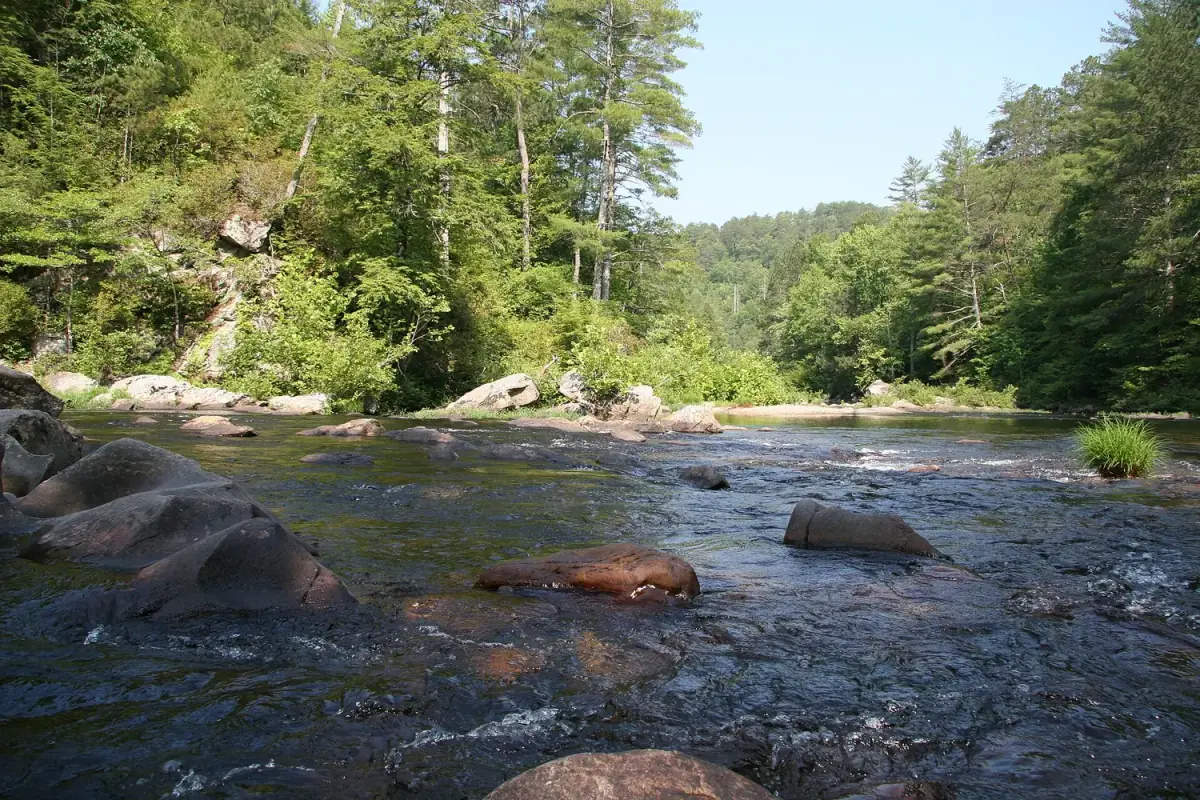
Streams and ponds in North America are rarely tropical. Many of the fish thrive at room temperature, without a heater. Read more about what a biotope is in Biotope aquariums: a slice of nature.
Water
15–24 °C and pH 6.5–8 is a good range for most of the species. But in nature it varies a lot: winter is cold, and summer can get warm in shallow ponds and streams.
Some species need a cool period. The Everglades pygmy sunfish (Elassoma evergladei) lives in Florida and the southeastern United States, and thrives at 10–22 °C. It needs a cool winter rest to thrive and breed. An unheated room in winter is often enough. Make the change gradually, and do not let the water drop below 10 °C.
In summer, the water must not get too warm. Above about 25 °C the water holds less oxygen, and the fish get stressed. Place the aquarium away from sunny windows, use a lid that lets air in, and a fan over the surface cools things a little through evaporation.
Pygmy sunfish like soft, slightly acidic water, with pH 6–7 and a hardness of up to 12 dGH. Keep the flow gentle and the filter calm, so the water is not too turbulent for the small fish.
Bottom
Sand and gravel, ideally with smooth, rounded stones. In the streams and ponds of the southeastern United States, the bottom is often mud, sand and clay, with fallen leaves and roots lying and decaying.
In the aquarium, fine sand is the best choice. It is gentle when the fish search for food on the bottom, and it is easy to clean. Coarse gravel traps waste in the gaps, which easily leads to ammonia if you do not siphon it regularly.
A layer of dried aquarium leaves over the sand gives a true stream feel and cover for the small fish. Replace the leaves when they are brown and limp. See Substrate and decor.
Decor
Rocks, roots and leaves, depending on whether it is a stream or a pond. A stream has driftwood, roots and a rock or two. A pond has fewer rocks, more leaves and more plants at the surface.
Pygmy sunfish are happiest with lots of hiding places. Add a root that sticks up above the water, and let a few rocks form caves in the corners. Roots should be soaked or boiled before you add them, so they do not float. They stain the water brown, which is what you want in a biotope like this.
Plants
Arrowhead, American vallisneria, ludwigia and hornwort. Pygmy sunfish do best among dense plants.
In nature, these fish live in dense vegetation along still edges and in shallow ponds. Plants give cover, and they keep the water fresh by taking up nutrients that would otherwise turn into algae.
- Hornwort (Ceratophyllum) floats freely or stands in a clump, and gives dense cover.
- Ludwigia and arrowhead give taller growth and shade along the back.
- American vallisneria is an easy rooted plant with long leaves.
- Floating plants dim the light and bring calm. Keep them in check, or they cover the whole surface.
Pygmy sunfish lay their eggs on plants. Each spawning gives 40–60 eggs. The parents often leave the fry alone, but many people move the adults to be safe. The fry need infusoria as their first food. See Easy plants for beginners and How to care for aquarium plants.
Light
Medium to subdued. In nature, shade from trees and brown water blocks much of the light. Pygmy sunfish prefer subdued light, so it helps to have floating plants that diffuse it. Bright light directly over the water often brings more algae.
How long and how bright the light should be is covered in Lighting: how long and how bright. Start low, and only increase it if the plants need it.
Typical fish
- Pygmy sunfish (Elassoma). Small, calm fish. Males of Elassoma gilberti grow up to 3 cm. Keep one male with 2–3 females in a small aquarium. In a larger one you can have several males, if there are plenty of females and dense vegetation. They need live or frozen food, such as baby brine shrimp, mini bloodworms, copepods and daphnia. Dry food alone is not enough.
- Small minnows (shiners). Many shiners are schooling fish that do well in groups. Red shiners (Cyprinella lutrensis) thrive at 15–25 °C and suit an unheated aquarium. They want an aquarium of at least 90 cm for a school. They eat dry food, and gladly live or frozen mosquito larvae, brine shrimp and daphnia.
- Darters (Etheostoma). Small fish that stay near the bottom. They prefer live food, but can be weaned onto frozen food such as brine shrimp and tubifex. They are nervous and jump out when startled, so the aquarium must have a lid. They do not cope with large, aggressive species in the same tank.
Many of the species are rare in the trade, so it can take time to find them. See Choose fish that suit your water and Fish that get along.
Things to watch out for
- Summer heat. Many of these fish are not made for water above 25 °C for long periods. Do not place the aquarium in the sun.
- Too cold in winter. The cool rest is good, but the water should not drop below 10 °C, which is the lower limit in the sources.
- Wild fish and plants. Check your local rules before collecting fish or plants from the wild, and never release aquarium fish into a stream or pond.
- Overfeeding. Leftover food produces ammonia. See Feeding: less is more, and Cycling: the nitrogen cycle explained before the fish move in.