Feeding: less is more
How much and how often to feed your fish, why overfeeding is so dangerous, and food for bottom dwellers and herbivores.
The most common mistake
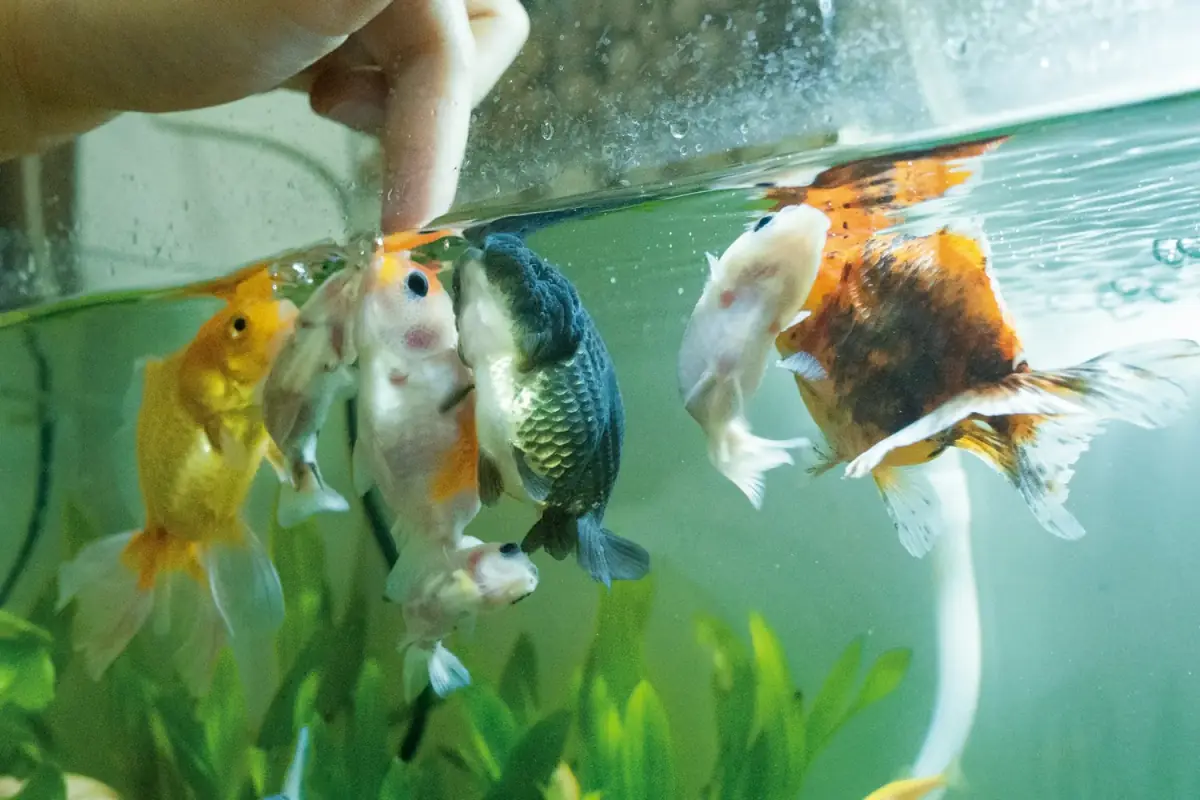
Fish always look hungry. They gather at the glass when you come over and eat everything that lands in the water. It's easy to think they need more, but it's almost always the opposite.
Mattilsynet writes that most deaths among aquarium fish are caused by overfeeding that leads to poor water quality. The fish don't die from eating too much, but from what happens to the food that's left over. It rots and turns into ammonia, which is toxic, and the bacteria in the filter can't keep up with all of it. See Cycling: the nitrogen cycle explained for what happens in the water.
Overfeeding also leads to cloudy water, algae and snails that multiply. Many problems in the tank start with too much food.
How much
A good rule of thumb is as much as the fish eat in a couple of minutes. Whatever is still floating around or lying on the bottom after that was too much.
- Start small. Give a pinch, see how fast it disappears, and add a bit more if it's all gone in under a minute.
- Remove what's left over, with a net or when you vacuum the gravel during the water change.
- Follow the directions on the food, but think of them as an upper limit, not a target.
How often
Most adult fish do fine with one to two feedings a day. Several small feedings are better than one big one, since less is left over.
- Young and small fish eat more often, ideally several small feedings a day.
- A fasting day once a week doesn't hurt adult fish, and gives the water an easier day.
- Don't feed in the hour before the lights go out, unless it's for fish that are active at night. Fish getting ready to sleep eat poorly, and the food is left lying.
Adult fish can easily go a few days without food. A fish that has eaten too little for two days won't be harmed. A tank that has had too much food for two days can be.
A varied diet
In nature, most fish eat a wide range of things. A good flake or granule food is a fine staple, but feel free to give something else a couple of times a week:
- Frozen food such as bloodworms, brine shrimp and daphnia. Thaw it in a little tank water before feeding.
- Live food such as brine shrimp or daphnia, which also brings out the hunting instinct.
- Vegetables for herbivores: blanched zucchini, cucumber or peas. Remove the leftovers after a day.
Mattilsynet reminds us that fish food is perishable. It shouldn't be kept in the sun or somewhere warm. An opened container also loses nutrients over time and should be used up within a couple of months, so it's better to buy small containers.
Fish that eat from the bottom
Fish like corydoras, plecos and loaches eat from the bottom, and often get little once the fast fish in the upper layers have taken the flakes. Give them sinking food, such as tablets or pellets, ideally just after the lights go out, when many of them are most active.
That doesn't mean bottom dwellers should live on leftovers. A corydoras is not a vacuum cleaner, and a tank that depends on someone cleaning up after feeding is getting too much food.
When you're unsure
- Is the water cloudy or ammonia above 0? Feed less, or skip a day.
- Are the fish thin, or are some not eating? Check whether the fast ones are taking everything, and try sinking food or feeding in several spots at once. A fish that stops eating may also be sick.
- Going on vacation? Read Vacation: what do I do with my fish? before you buy an automatic feeder or a vacation feeder block.
The species profile in the app tells you what each species eats and where in the tank it lives.