Substrate and decor
Gravel or sand, how deep the substrate should be, how to rinse it, and rocks and wood that change the water.
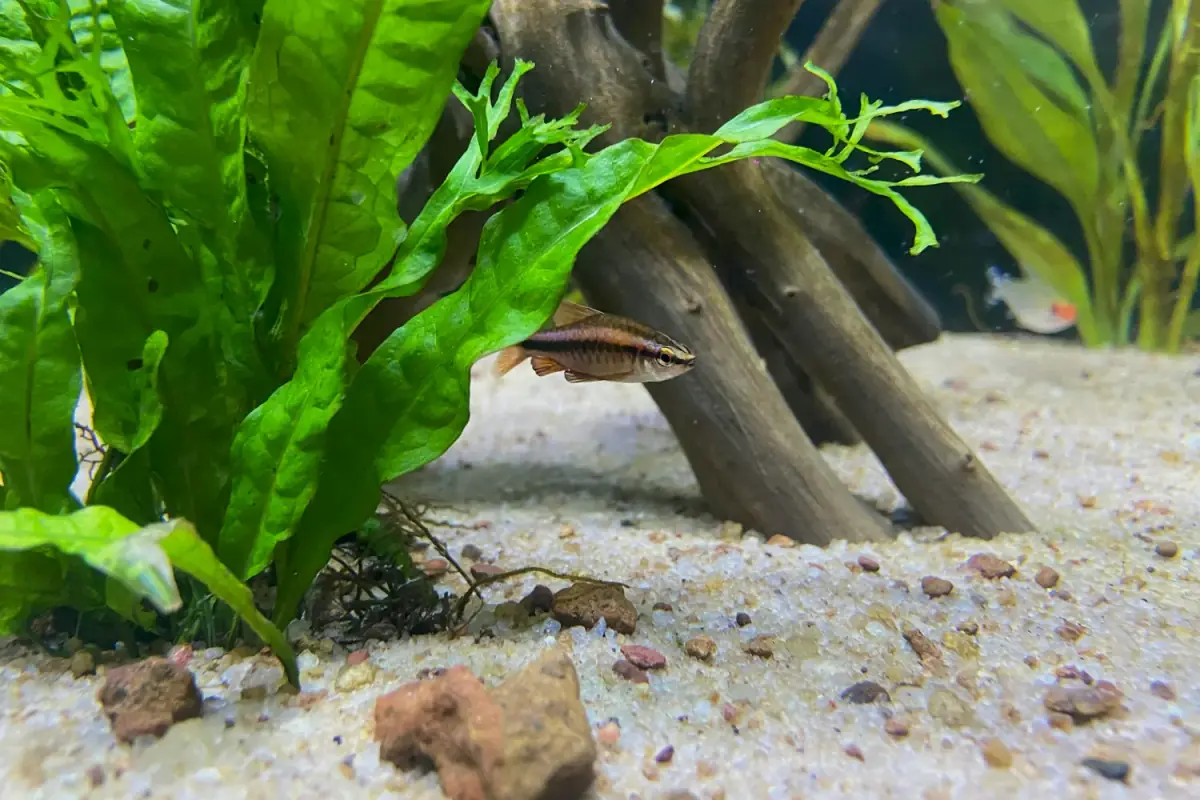
Why the substrate matters
The substrate is more than decoration. It is home to many of the bacteria that keep the water clean, the plants grow in it, and many fish make a living searching it for food. Mattilsynet writes that most aquariums should have a substrate of at least five centimeters of fine gravel.
Gravel or sand
- Gravel is the most common. Choose a grain size of a few millimeters. Gravel is easy to vacuum clean, and plant roots get a good grip.
- Sand suits fish that dig in the bottom or bury themselves, such as Corydoras, loaches and many cichlids. Choose aquarium sand or fine, rounded sand, not sharp construction sand.
- Plant soil is a nutrient-rich substrate made for plants. It is often laid under a layer of gravel or sand, or used alone in planted tanks. Some types lower pH and hardness.
Corydoras and other fish that root around with their snouts in the bottom can damage their barbels on sharp-edged gravel. If you keep fish like that, sand or fine, rounded gravel is best.
Color
A dark bottom often makes fish show stronger colors and feel safer, while a light bottom gives a brighter tank. Avoid colored gravel with paint that can come loose. Natural colors usually look best and suit the fish best.
How to lay the substrate
- Rinse the gravel or sand in a bucket under running water, stirring well. Keep going until the water is almost clear. It can take a long time, but it saves you cloudy water later. Plant soil usually should not be rinsed. Read the package.
- Slope the substrate, ideally a little higher at the back than the front. It gives depth, and dirt collects at the front where you can reach it with the gravel vacuum.
- Place rocks and wood directly on the bottom glass or well down in the substrate, so they stand firm and cannot topple when fish dig underneath.
- Fill with water gently, for example over a plate or a plastic bag, so the substrate is not stirred up.
Rocks
Rocks give structure and cover, but some types change the water:
- Calcareous rock such as limestone, marble, dolomite and coral releases lime. The water gets harder and the pH higher. That suits fish from Lake Malawi and Lake Tanganyika, but not soft-water fish.
- Neutral rock such as slate, granite, quartz and lava rock changes the water very little.
If you are unsure, drip a little vinegar on the rock. If it fizzes, it contains lime. The test is rough: limestone and marble fizz clearly, while dolomite barely reacts, so a rock that does not fizz can still release a little lime.
Rocks from nature can be used, but scrub them well in hot water without soap. Avoid rocks with metal veins or rust.
Driftwood
Driftwood gives a natural look, cover for fish and a place to attach plants such as Java fern and Anubias. Many catfish need it too, because they rasp on the wood.
- Buy wood made for aquariums, or be sure it is dry and dead. Fresh wood can rot.
- Soak the wood for a few days before it goes into the tank. Then it sinks, and much of the color leaches out.
- Brown water in the first weeks is normal. It is tannins from the wood, harmless to the fish, and many soft-water fish like it. Water changes and activated carbon in the filter remove it.
Driftwood can make the water a little more acidic, especially in soft water with little buffering capacity. That suits soft-water fish well. If your water is hard, the effect is small.
Ornaments and plastic plants
Ornaments made for aquariums are safe, but avoid things not made to sit in water, such as painted figures, metal and shells from the beach (they release lime). Plastic plants are fine, but live plants make the water better. See Easy plants for beginners.
Think of the fish when you decorate. Soft-water fish want driftwood and plants, many cichlids want caves and rocks, and schooling fish want open spaces to swim in. Read Choose fish that suit your water for more about the water.