Before you buy an aquarium
What an aquarium costs in time and money, where it should go, and why a bigger tank is easier than a small one.
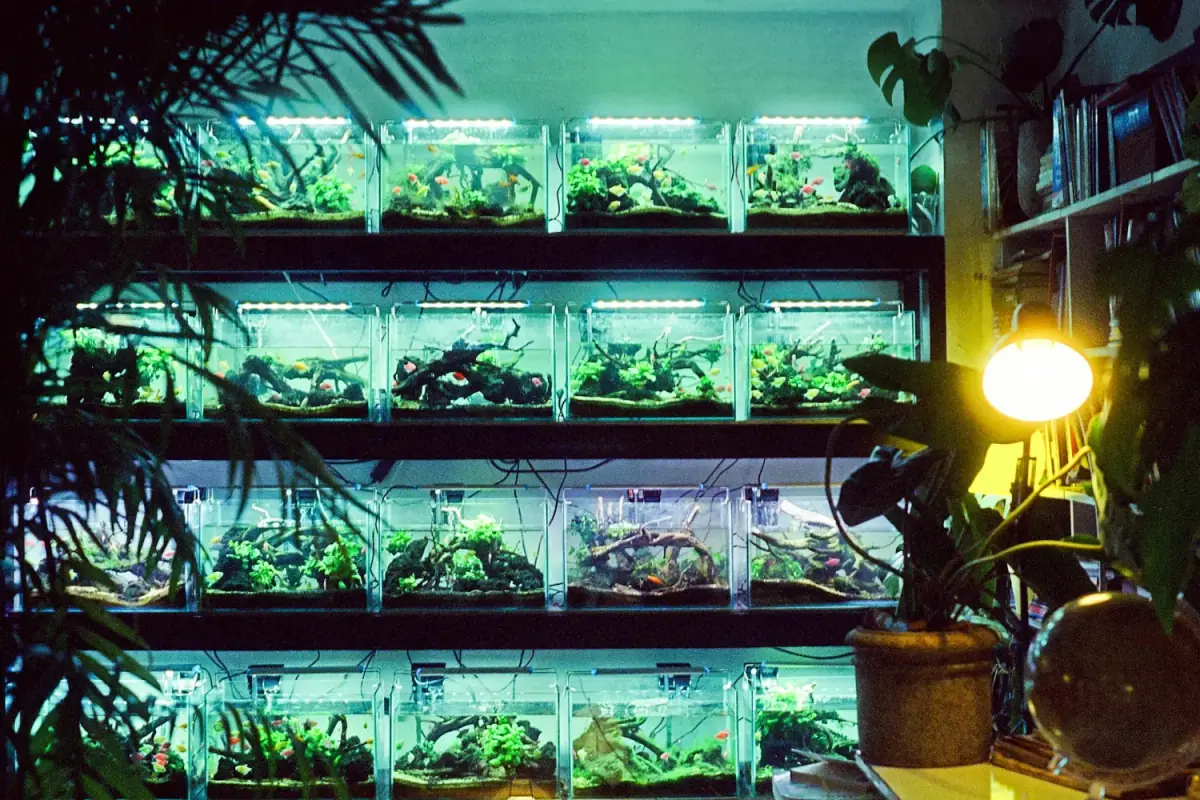
An aquarium is alive
An aquarium is not a piece of furniture with fish in it. It is a small ecosystem, with bacteria that break down waste, plants that grow and fish that depend on the water staying clean. Most of it runs by itself once the balance is in place, but that balance does not happen on its own, and it has to be kept up.
It is worth thinking through a few questions before you buy:
- Do you have time every week? A water change, a bit of cleaning and a look at the water values usually take half an hour to an hour a week.
- Who looks after the fish when you are away? A large, well-running tank can often go a week or two without care, but someone should still stop by and check that everything works.
- Are you patient? A new aquarium has to cycle for several weeks before the fish can move in.
What it costs
Most of the money goes at the start. The tank, the stand, the filter, the heater, the light and the substrate are the big items, and a complete starter kit is often cheaper than buying the parts separately. Fish and plants are usually a smaller part of the bill.
After that the costs are small, but they keep coming:
- Power for heating, filter and light, most of all in winter in a cold room
- Food and water conditioner
- Test kits that need replacing, and filter media that wears out over time
- New plants and fish when you feel like it, and you will
You can read more about what you need and what can wait in The equipment you need.
Where it should go
Mattilsynet writes that the aquarium must stand on a level, sturdy surface shielded from direct sunlight. There are three good reasons for that:
- Weight. A liter of water weighs a kilo, and then come the glass, substrate and rocks on top. A 100-liter tank often weighs 120–150 kilos filled, not counting the stand. Use a stand made for aquariums, and think about the floor if the tank is large.
- Level. A tank that leans puts uneven strain on the glass and the seams. Check with a spirit level before you fill it.
- Sunlight. Direct sun causes algae and can heat the water too much in summer.
It is also a good idea to place the tank:
- near a power outlet, ideally so the cords can hang in a loop below the outlet, so water running along them never reaches it
- where you can get to it to change water and reach the filter
- away from doors and stairs with a lot of traffic, and away from radiators and drafts from a window
Try not to move it later. An aquarium that has to be moved must be emptied almost completely.
Big is easier than small
It sounds wrong, but it is one of the most important pieces of advice for new aquarists: a big aquarium is easier than a small one. Mattilsynet recommends at least 100 liters and writes that bowls and small tanks are not suitable for fish, not even small fish.
The reason is that more water leaves more room for mistakes. In a small tank things go wrong fast: a little too much food, a dead fish nobody finds, or a cold night, and the water is bad before you notice. In a big tank the same thing is diluted in much more water, and you have time to put it right.
A bigger tank also gives you more choice of fish, and more room for them to swim. Many lovely schooling fish need more space than the small tanks in the store offer.
Before you go shopping
- Decide roughly which fish you want before you choose a tank. Then you know how big it must be and what water they need. Read Choose fish that suit your water and Fish that get along.
- Check your tap water. Your water supplier often lists hardness and pH on its website.
- Plan the cycling. The fish are bought last, after the tank has been running for a few weeks. See Cycling: the nitrogen cycle explained.
Feel free to make a plan in the app before you shop. There you can add the tank you are thinking of buying, try out fish and see whether they get along and have room.