How to set up a South American aquarium
Soft, acidic water, subdued light, sand, roots and fallen leaves: how to set up a biotope aquarium from the Amazon and the rivers around it.
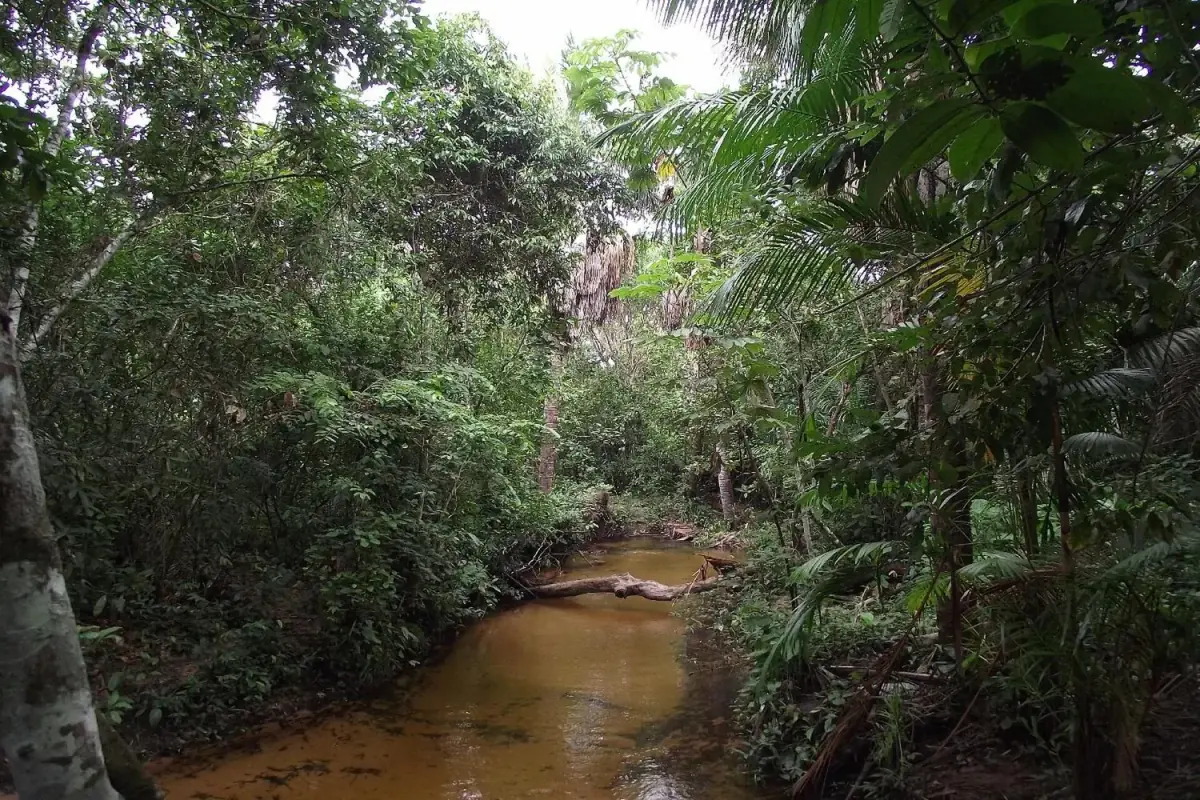
The Amazon and the rivers around it are soft, acidic water under a dense canopy of rainforest. Think subdued light, a sandy bottom, roots and fallen leaves. Read more about what a biotope is in Biotope aquariums: a slice of nature.
Water
Soft and acidic: 24–28 °C, pH 5.5–7, GH 1–8. The blackwater of the Rio Negro is even more acidic, down toward pH 4.5, and brown from the tannins of leaves and roots. It has almost no calcium, and that is exactly what makes the water acidic.
Tap water varies a lot by region, from very soft to very hard. If yours is soft, with little calcium and low KH, it is a good starting point; if it is hard, mix it with RO water gradually, testing as you go. Either way, measure it yourself before you buy fish. See How to test your water.
Do not try to lower the pH with chemicals. Rapid swings stress fish more than a value that is a little too high. Leaves and roots do the job slowly and steadily. If you want the brown color, do not use activated carbon, because carbon removes the tannins and the water turns clear.
Bottom
Fine sand, ideally dark. Corydoras and dwarf cichlids dig and sift through it, and the barbels of Corydoras can be damaged by sharp gravel, so avoid gravel with edges. Use aquarium sand or fine, rounded sand, not builder's sand. Lay a layer a few centimeters deep, and rinse the sand well before it goes into the aquarium.
Avoid coral sand and marble. They make the water harder, and you do not want that here.
Decor
Roots and branches give shade, cover and a natural shape. Buy roots made for aquariums, and boil or soak them for several days before you put them in. Otherwise they float, and they can release brown color for weeks.
Dried oak, beech or catappa (Indian almond) leaves give cover, and the tiny organisms that live on them are good food for fry. Soak the leaves in water for a while before you use them. Keep a thin, even layer: enough to cover the bottom, not a thick blanket that rots and turns slimy. Replace some of the leaves when they are brown and soft.
Plants
Many South American biotopes have few plants, because the brown water and the forest canopy let in little light. Roots and leaves do the job. If you want plants, choose those that cope with low light and soft water:
- Floating plants that dim the light, such as water spangles (Salvinia), Amazon frogbit (Limnobium) and Ceratopteris.
- Amazon swords (Echinodorus) in the background of a larger aquarium. They come from South America and thrive in soft water.
See Easy plants for beginners for more choices.
Light
Subdued. Floating plants and a dark bottom give shade, and the colors of the tetras show better when they are not under bright light. Choose a low-output lamp, and do not run it longer than needed. See Lighting: how long and how bright.
Typical fish
Schooling tetras are the classics. Cardinal tetras grow up to 3.5 cm and should be kept in a school of at least 8–10 fish. A small group easily feels unsafe and does not show its colors. Neon tetras and glowlight tetras are other common choices.
Corydoras stay at the bottom and tidy the substrate. Dwarf cichlids such as Apistogramma agassizii grow up to 7.5 cm for the male and 5 cm for the female. A pair manages in an aquarium of 60 × 30 cm. The female can become very aggressive when guarding fry, and in small aquariums it may be wise to move the male to a tank of his own.
Hatchetfish stay at the surface. Angelfish and discus suit larger aquariums. Check that the fish suit each other in size and temperament, see Fish that get along.
Things to watch out for
- Leaves make the water brown and lower the pH, but it takes time. Do not use chemicals to fix it quickly.
- Dead leaves rot and produce ammonia if there are too many in the aquarium. Keep an eye on the values, and see Cycling: the nitrogen cycle explained.
- Activated carbon removes the brown color, so the water is no longer blackwater.
- A lone cardinal tetra is not enough. Add a full school, or it stresses itself out.