How to set up a Central American aquarium
Hard, alkaline water, sand and rock: an aquarium from the rivers and lakes of Mexico and Central America, with cichlids and livebearers.
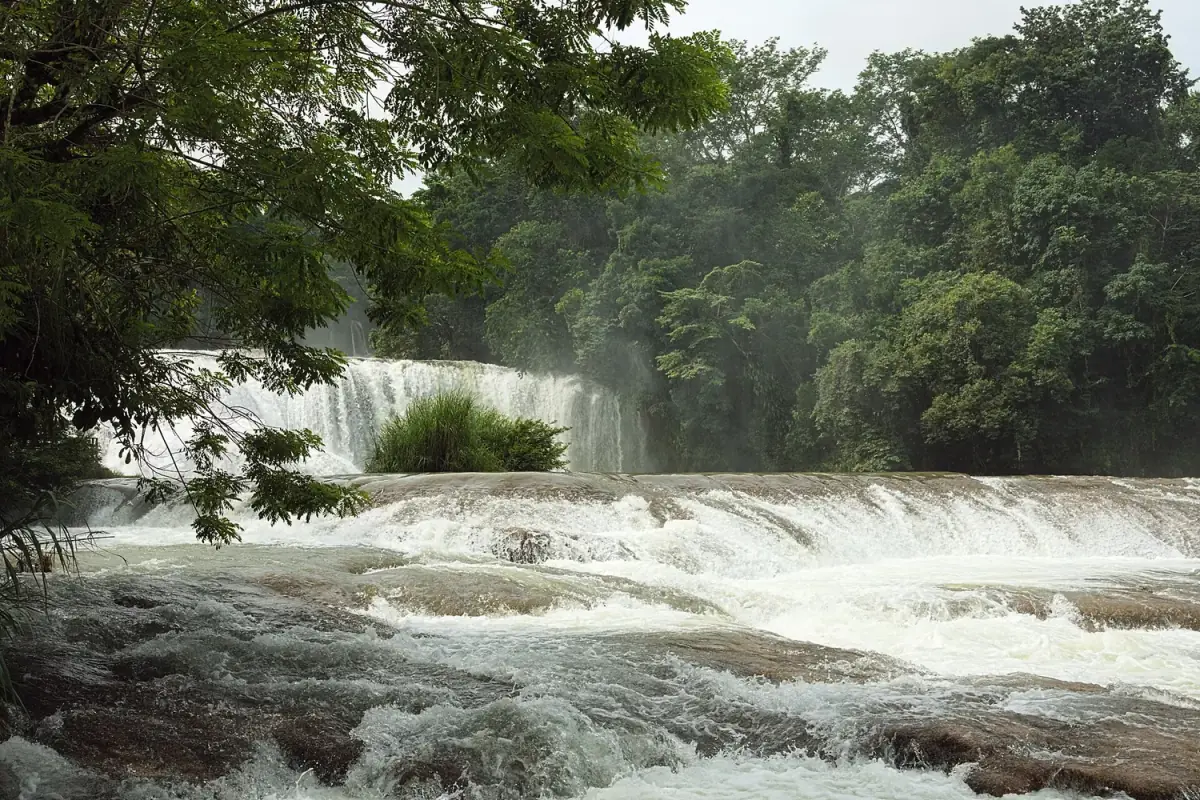
The rivers and lakes of Mexico and Central America have hard, alkaline water and often a clear bottom of rock and sand. The region stretches from Veracruz in Mexico south to Guatemala, Belize and Honduras, and many cichlids and livebearers live here. Read more about what a biotope is in Biotope aquariums: a slice of nature.
Water
The water in these rivers is hard and alkaline. Much of it comes from limestone in the bedrock, and the pH is often between 7 and 8. It is warm, and the aquarium should be kept around 24–28 °C.
This is a good starting point for the aquarium: 24–28 °C, pH 7–8.5 and GH 10–20. The species cope with a wider range: the firemouth cichlid tolerates 2–15 dGH, and the swordtail 10–25 dGH. Stay near the middle, and you avoid swings.
Tap water varies a lot by region, from very soft to very hard. If yours is hard, it may already be close. If it is soft, you need to make it harder, and this is the best way to do it:
- Measure first. Test GH, KH and pH straight from the tap, and again after the water has stood. See How to test your water.
- Mix in a bucket. Mix new water with a mineral salt for harder water in a bucket. Follow the dose on the package, and use the water for your water change. That is better than adding a lot directly to the aquarium.
- Use calcium in the filter. Crushed coral, shell sand or limestone in a filter bag releases calcium slowly. KH and pH rise gradually.
- Table salt does not help. It does not make the water harder.
Test GH and KH once a week for the first few months. If you see them rising too fast, remove the calcium source and change some of the water.
Bottom
In nature, the bottom is sand, mud and rock. Lakes and lagoons tend to have a softer bottom, while the rivers have more rock.
In the aquarium, fine sand or fine, rounded gravel works best. Choose a light sand that resembles the limestone bottom, or a dark bottom if you want the colors to stand out. Lay a substrate of at least five centimeters, as Substrate and decor explains.
The cichlids dig. They move sand around, uproot plants that are not anchored, and can dislodge rocks lying on the bottom. So plant where they cannot dig them up, for example on rocks and roots, and set heavy rocks directly on the bottom glass.
Decor
In nature there is plenty of cover: rocks, roots, fallen branches and layers of leaves. The cichlids need clear borders between their territories. Without them, there is more fighting.
In the aquarium you can use:
- Rocks such as limestone and marble, which suit this water. Scrub any rocks from nature well first.
- Driftwood and roots, which give cover and a dark, natural mood. Soak them for a few days before they go into the aquarium.
- Pots and pipes made for aquariums. They give cover without changing the water.
Set up the rocks so they stand steady. If you stack them high, they can topple when the fish dig underneath, and both fish and glass can be damaged. Put the largest and flattest rocks at the bottom.
Plants
Many of the rivers here have few or no aquatic plants, and often there is only algae and a little vegetation along the banks. The plants in the aquarium are therefore mostly for cover and for keeping the water in balance.
Choose plants that cope with hard water and digging. Vallisneria and hornwort are hardy and grow fast. Anubias and Java fern cope well with digging, because they are attached to rock or wood and do not sit in the substrate. Plastic plants work too, and are a good choice if the cichlids pull up everything you plant.
If you have few plants, the filter and water changes have to do more of the work of keeping the water clean.
Light
Some of the rivers lie in open sun, others under dense forest. Where there is shade, cover and subdued light matter to the fish.
Medium light suits the aquarium. Floating plants or driftwood can dim the light over parts of the aquarium, and give the fish places to retreat to. Use a timer, so the light comes on at the same time every day. There is more on this in Lighting: how long and how bright.
Typical fish
- Firemouth cichlid (Thorichthys meeki) is territorial, especially when spawning. A pair needs an aquarium of at least 120 × 30 cm. It may eat smaller fish.
- Convict cichlid is another cichlid from the same area. It also needs clear territories.
- Swordtail (Xiphophorus hellerii) is a livebearer that copes with hard water and does well in a group. The males form a pecking order, so leave room for several.
- Platies and mollies suit the same water well. They need medium to hard water, and should not be kept with fish from soft water.
- Astyanax tetras also live in this region.
Check that the fish you choose suit each other in size and temperament. See Fish that get along.
Things to watch out for
- Cichlids knock things over. Secure the rocks, and check the decor after the fish have been digging.
- Do not mix with fish from soft water. Tetras and Corydoras from the Amazon do poorly in hard, alkaline water, and the cichlids may harass them.
- There must be enough room. An aquarium of 120 × 30 cm is a minimum, and swordtails breed quickly. Start with fewer fish than you think you have room for.
- Hard water can be demanding. Calcium in the filter dissolves over time, so the values change. Test more often than you think you need to.