Shrimp and snails in the aquarium
Dwarf shrimp and snails that brighten up and tidy the tank: which are easy to start with, what they need from the water, and who they can live with.
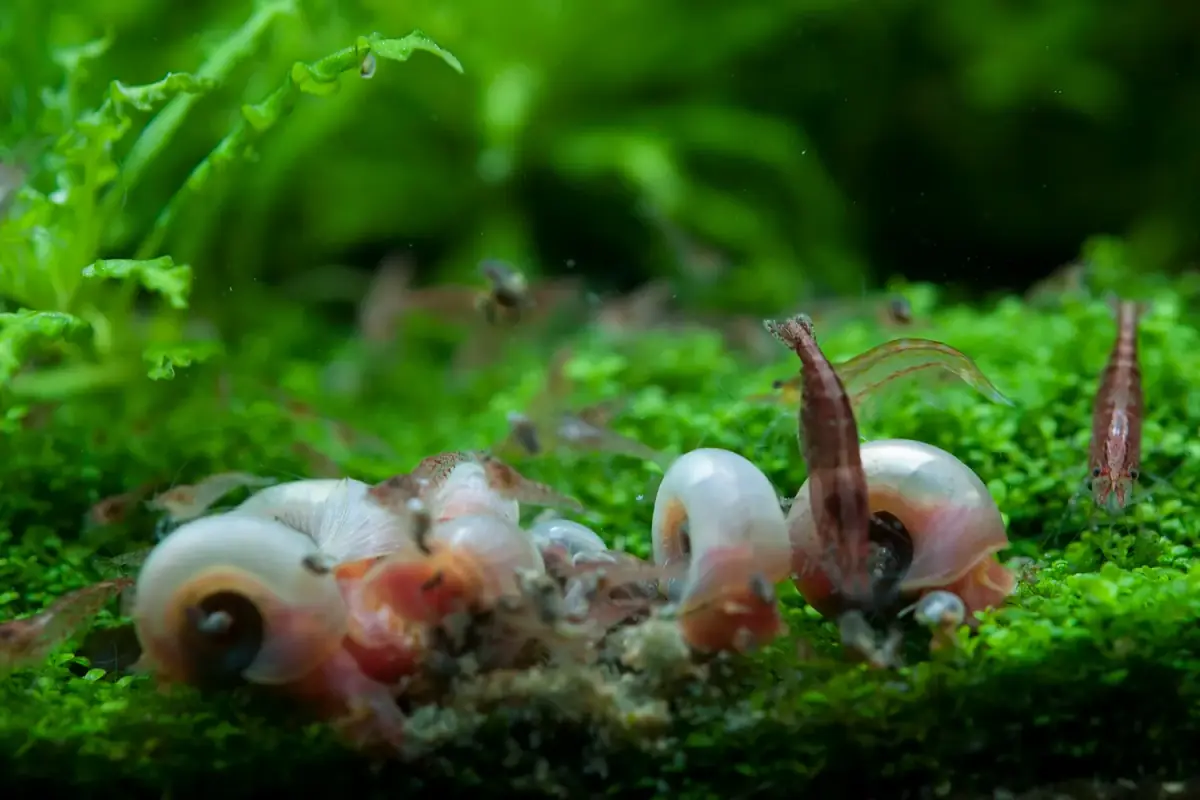
Small animals, big joy
Shrimp and snails are a little world of their own in the aquarium. Dwarf shrimp graze on every rock and leaf all day long, and snails keep the glass and leaves free of film. Many aquarists start with a few shrimp as an extra, and end up with a dedicated shrimp tank.
They tidy up a bit, but they're no fix for too much food or algae. Think of them as animals with needs of their own, not as a cleaning crew.
Dwarf shrimp
The most common dwarf shrimp in stores come from two groups:
- Neocaridina, such as red cherry shrimp and other color varieties. They're hardy, do well in ordinary water and breed easily. These are the ones to start with.
- Caridina, such as crystal shrimp and bee shrimp. Many find them prettier, but they need soft water and are more sensitive to changes in it, so they're best once you have some experience.
Shrimp molt regularly, and the old shell is left lying on the bottom. It's not a dead shrimp. Leave the shell, since the shrimp often eat it and get some minerals back. Molting is the vulnerable moment: sudden changes in the water, such as a big water change with water that's quite different, can make it go wrong.
Shrimp like:
- a cycled tank that has been running for a while. See Cycling: the nitrogen cycle explained.
- plants and moss to graze on and hide in, especially after molting
- small, regular water changes rather than big ones
- a filter with a fine intake screen or sponge, so baby shrimp don't get sucked in
Snails
- Nerite snails are good algae eaters and rarely become numerous in fresh water, because their larvae need brackish water to develop. They do still lay small white eggs on rocks and glass that are hard to remove.
- Mystery snails (Pomacea) are large and colorful, and lay clutches of eggs above the waterline.
- Trumpet snails, ramshorn snails and bladder snails often come along for free with plants, and can become numerous. See Snails that multiply.
Snails build their shells from calcium. In very soft or acidic water, the shell can become thin and brittle. That's a problem wherever tap water contains little calcium, which varies a lot from region to region.
The water they need
The most important thing is stability: shrimp cope poorly with sudden changes in temperature and water values. Beyond that, both shrimp and snails need some minerals in the water, measured as GH and KH. If your tap water is very soft, you can raise the hardness a little with a mineral supplement for shrimp, or with a little crushed coral or crushed shells in the filter, as long as your fish can handle it. If it's already hard, there's usually enough for them. Tap water varies a lot, so check your water supplier's figures or test it. See Choose fish that suit your water.
Each species' profile in the app shows what water it thrives in.
Copper and other dangers
Copper is toxic to shrimp and snails, even in small amounts. It's found in many anti-parasite medications, such as treatments for Ich (white spot) and velvet, and in some plant fertilizers. The amount in fertilizer is usually so small that it's harmless, but medications are what you need to watch out for. Always read the label before you add anything to the tank. If it doesn't say it's safe for invertebrates, move them out first.
Also be careful with snail and algae treatments, and with new equipment and decorations. Rinse everything in water first.
Who they can live with
Many fish eat baby shrimp, and larger fish eat adult shrimp too. If you want your shrimp to breed, choose small, peaceful fish, and give the shrimp plenty of hiding places in plants and moss.
- Good neighbors: small rasboras, danios and tetras, otocinclus and small Corydoras.
- Bad neighbors: cichlids, large barbs, goldfish and anything with a mouth big enough for a shrimp.
See Fish that get along, and use the Harmony mark in the app when you put your tank together.
Sources
- MattilsynetVeiledning om hold av akvarium
- UF/IFASUse of Copper in Marine Aquaculture and Aquarium Systems
- MSD Veterinary ManualManagement of Aquarium Fish
- Practical FishkeepingFrequently asked questions on Neocaridina shrimps
- UF/IFASApplesnails of Florida Pomacea spp. (Gastropoda: Ampullariidae)
- Animal Biodiversity and ConservationThe gastropod Vitta zebra (Bruguière, 1792) (Neritidae): a possible amphidromous species threatened by human impact in Brazilian rivers