Snails that multiply
Where the little snails come from, why lots of snails often means too much food, and how to bring their numbers down without poison.
Where they come from
One day there's a tiny snail on the glass, and a few weeks later there are hundreds. Almost everyone has been there. The snails, or their eggs, came in with plants from the store or from another aquarium. The eggs are so small they're almost impossible to see.
The most common ones are:
- Bladder snails (Physella and similar): small, brown and pointed, and they breed very fast.
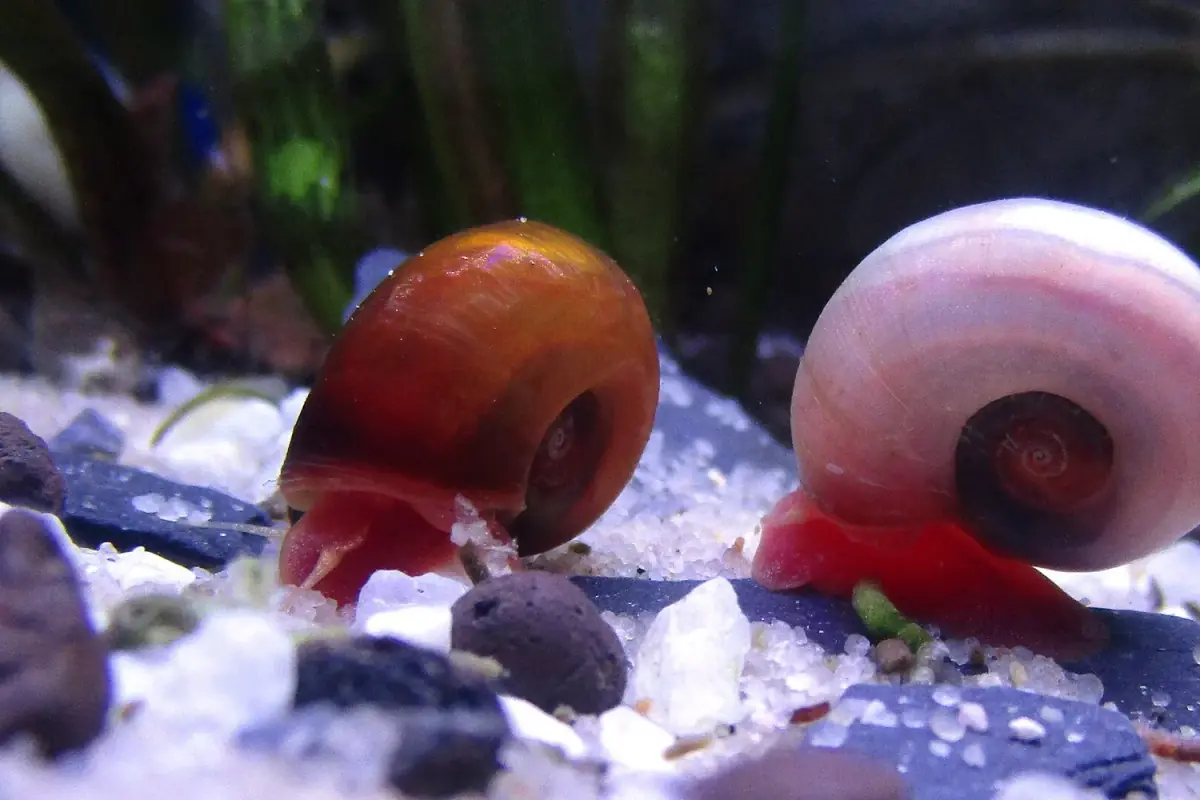
- Ramshorn snails (Planorbella and similar): flat and spiral-shaped, often red or brown.
- Malaysian trumpet snails (Melanoides tuberculata): long and pointed, and spend much of their time down in the substrate.
Are they a problem?
Usually not. These snails eat leftover food, algae and dead plant leaves, and in many ways do a useful job. Trumpet snails burrow in the substrate and loosen it up.
It's when there are a great many of them that they become a problem, mostly for looks. They can also nibble on soft, weak plants, and lots of snails dying at once makes for bad water.
Lots of snails means lots of food
Snails breed in step with the food they have. A tank with hundreds of snails is almost always a tank with too much leftover food or dead plant matter. That's why lots of snails are a useful warning.
Cut down the food, and you cut down the snails:
- Feed less, so everything is eaten within a couple of minutes. See Feeding: less is more.
- Vacuum the substrate during water changes, so leftovers don't sit there.
- Remove dead and rotting plant leaves.
It takes a few weeks, but it's the only solution that lasts.
How to get their numbers down
- Pick them out whenever you see them, ideally in the evening when many are out and about.
- Snail trap: put a leaf of blanched lettuce or a slice of cucumber in the tank in the evening, and take it out in the morning with the snails on it. You can also buy ready-made traps.
- Snail-eating snails: assassin snails (Anentome helena) eat other snails, even ones bigger than themselves. They also eat nerite snails and other snails you want to keep, and may take small shrimp.
- Fish that eat snails, such as some loaches and pufferfish, need a lot of space and only suit some tanks. Never choose fish just to get rid of snails.
Avoid chemicals
Snail treatments work, but they often contain copper or other substances that also kill shrimp and other snails, and can harm sensitive fish. If lots of snails die at once, they rot and release ammonia into the water. Use them only if you've tried everything else, and do water changes afterward.
How to keep them out
- Buy tissue-culture plants in sealed cups. They should be free of snails.
- Rinse and inspect plants from stores or other aquarists before adding them.
- Some people dip plants in a weak bath of alum or diluted bleach to kill eggs. It can damage the plants, so it has to be done right. Tissue-culture plants are safer.
Snails you want
Not all snails are unwanted. Nerite snails are good algae eaters, and their larvae need salt water to develop, so they don't breed in fresh water. There's more about snails and shrimp as aquarium pets in Shrimp and snails in the aquarium.
Sources
- USGSred-rim melania (Melanoides tuberculata) - Species Profile
- PeerJQuid est Clea helena? Evidence for a previously unrecognized radiation of assassin snails (Gastropoda: Buccinoidea: Nassariidae)
- UF/IFASUse of Copper in Marine Aquaculture and Aquarium Systems
- Animal Biodiversity and ConservationThe gastropod Vitta zebra (Bruguière, 1792) (Neritidae): a possible amphidromous species threatened by human impact in Brazilian rivers