Algae: which kind and what to do
The most common algae in the aquarium, how to recognize them, and why the cause is almost always an imbalance of light and nutrients.
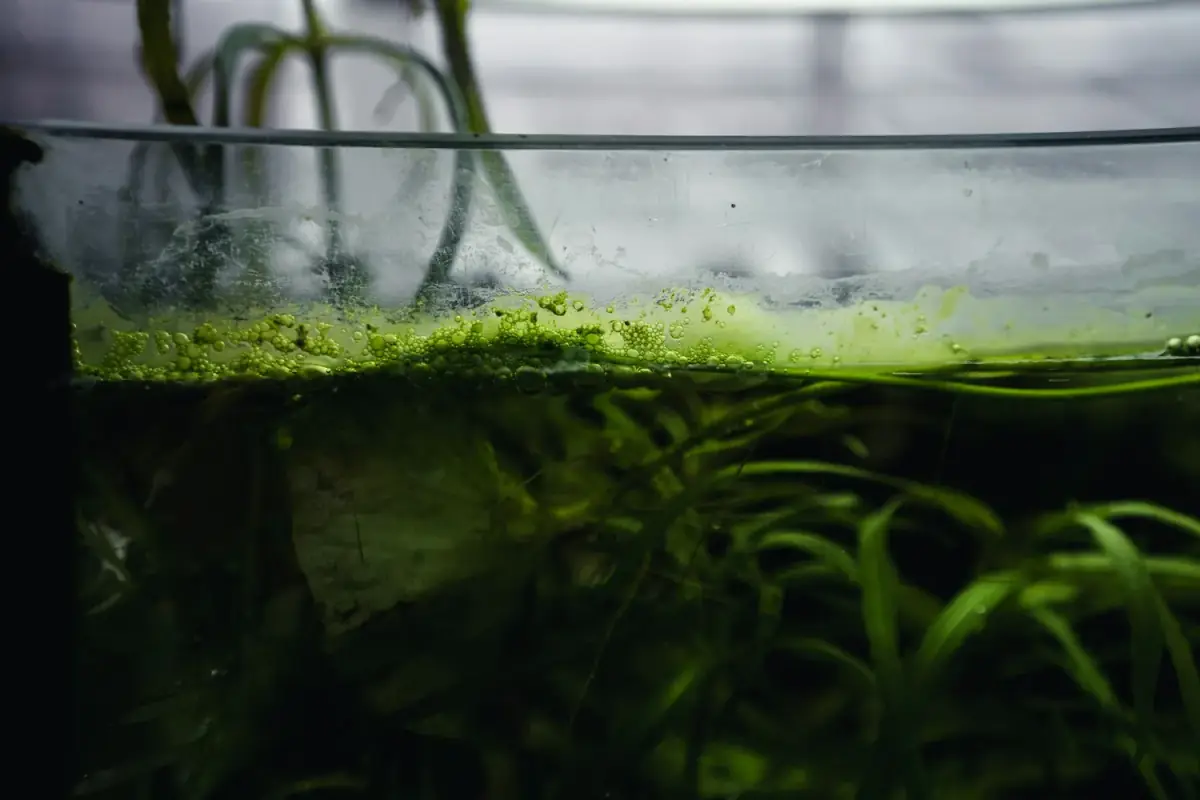
A little algae is normal
Algae is found in every aquarium, just as dust is found in every home. A thin green film on the glass a few weeks after cleaning is nothing to worry about. It's when algae grows faster than you can remove it that it's worth looking into why.
Algae lives on the same things as plants: light and nutrients. When there's more of both than the plants can use, algae takes the rest. That's why almost every fight against algae is really a fight for balance.
The most common algae
Green spot algae on the glass. Small green dots or a green film that wipes off easily. A little is normal. If it comes back quickly, there's often too much light.
Brown algae (diatoms). A brown, dusty coating on glass, rocks and plants that wipes off easily. Common in new tanks during the first weeks, and often disappears on its own once the tank has found its balance.
Hair algae. Long green threads that tangle in the plants. A sign of plenty of light and nutrients, but too little plant growth to use them.
Black beard algae (brush algae). Small dark tufts that cling to leaf edges, rocks and equipment, and are hard to remove. Often linked to low water flow, high phosphate or unstable CO₂, but the cause isn't always clear.
Blue-green algae. A slimy, blue-green or dark green mat that covers the substrate and plants, and smells bad. It's actually bacteria (cyanobacteria), not algae. It tends to appear where the water is still and there's a lot of waste.
Green water. Free-floating algae that turn the whole tank as green as pea soup. More about that in Cloudy water.
Common causes
- Too much light. Too many hours, too bright a light, or sunlight on the tank. See Lighting: how long and how bright.
- Too many nutrients. Overfeeding, too few water changes, or too many fish for the tank.
- Too few plants. Few plants use few nutrients and leave plenty for the algae.
- Unbalanced plant nutrients. In a heavily planted tank with strong light, a lack of fertilizer or CO₂ can also cause algae, because the plants stop growing.
How to get it down
- Remove what you can by hand. Wipe the glass, twist hair algae around a toothbrush, and trim off leaves that are covered.
- Do a water change and vacuum the substrate. That removes the nutrients algae feed on.
- Cut the light by an hour or two, or turn down the brightness.
- Feed less. See Feeding: less is more.
- Add more plants, ideally fast-growing stem plants or floating plants that use a lot of nutrients.
Change one thing at a time, and give it a couple of weeks before you judge whether it worked.
Blue-green algae is a special case
Blue-green algae spreads fast, and no fish will eat it. Siphon it out at every water change, increase the flow where it grows, clean the filter gently and feed less. Some people black out the tank completely for three to four days, with a water change before and after. The fish can handle it, but the plants may suffer a little.
Algae eaters
Fish and other animals that eat algae can help, but they don't fix the cause:
- Nerite snails eat the film on glass and rocks, and don't breed in fresh water.
- Amano shrimp eat hair algae and film algae.
- Otocinclus are small catfish that eat brown algae and green films, but they need a cycled tank with enough to eat.
Make sure the algae eaters suit your fish and your water, and that the tank is big enough. Some fish sold as algae eaters, such as certain plecos, grow large and stop eating algae as they get bigger.
Chemicals
Algae treatments can kill algae for a while, but it comes back as long as the cause is still there. Many are also harmful to plants, shrimp and snails. Use them only as a last resort, and never instead of fixing the balance.