How to add new fish
From the store to the tank: how to get the fish used to your water, why you should add only a few at a time, and what to watch for in the first few days.
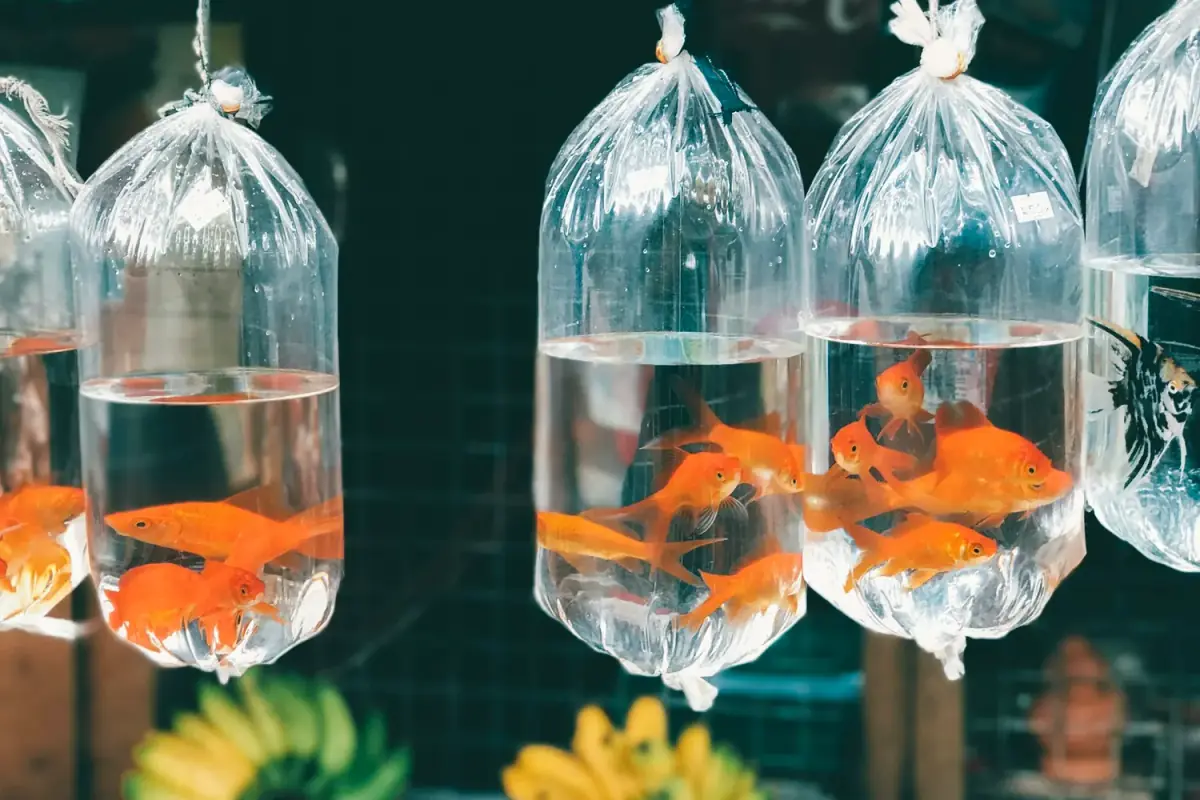
Before you head to the store
The best thing you can do for new fish happens before you buy them:
- The tank should be cycled. Ammonia and nitrite should be 0. See Cycling: the nitrogen cycle explained.
- Check that the species suits your water, the size of your tank and the fish you already have. It's in the species profile in the app, and there's more in Fish that get along.
- Look at the fish in the store. Pick a tank where all the fish swim normally, have spread fins and no spots or sores. If there are dead fish in the tank, wait.
Drive straight home, and keep the bag dark and steady. A bag in a styrofoam box or wrapped in newspaper holds the warmth in winter.
A few fish at a time
Every new fish adds more waste, and the bacteria in the filter need a little time to grow to match. If you add a lot of fish in one day, ammonia can rise even in a tank that has been running for a long time.
Start with a small group, and ideally wait a couple of weeks before the next. Test the water a few times after each round, and hold off on more until ammonia and nitrite stay at 0. Schooling fish are an exception in the sense that they should arrive as a group, not one at a time, so they don't get stressed on their own.
Temperature first
The water in the bag usually has a different temperature than the tank. Sudden changes stress the fish, and stress makes it easier for diseases like Ich (white spot) to take hold.
- Turn off the light in the tank. Fish in the dark are calmer.
- Let the closed bag float in the tank for 15–20 minutes, until the water inside is the same temperature.
Water little by little
The store's water may also have a different pH and hardness than yours. It's a good idea to get the fish used to the new water gradually:
- Open the bag and roll down the edge so it floats on its own, or pour the fish and water into a bucket.
- Add a little tank water, for example a cup, every five minutes.
- Keep this up for half an hour or more, until most of what's in the bag is tank water.
If your water is very different from the store's, for example soft tap water against hard store water, or the other way around, you can take a bit longer. Feel free to ask the store what their values are.
If the fish has been in the bag for a long time, for example shipped by mail, that's an exception. Ammonia has built up in the bag, and it becomes more toxic as pH rises when you mix in tank water. Instead, move the fish over once the temperature has evened out, without a long acclimation.
Into the tank
- Use a net to move the fish over. Don't pour the water from the bag into the tank. It can carry disease, and after a long trip there's often a lot of ammonia in it.
- Leave the light off for the rest of the day, so the fish can find a hiding place in peace.
- Hold off on food until the next day. Fish rarely eat the first evening, and the food just lies there.
If you already have fish, they may chase the new one a bit for the first few days. Moving some plants and decorations around before the new fish goes in can help, since everyone then has to find their place again.
The first few days
It's normal for a new fish to hide and have paler colors for a couple of days. Check on it every day:
- Is it eating after a day or two?
- Is it swimming normally, without rubbing itself or lying still on the bottom?
- Is it getting spots, sores or clamped fins?
If something looks wrong, test the water first. More on that in Sick fish: how to spot it and what to do first.
If you want to be completely safe, keep new fish in a separate tank for about a month before they go in. That's covered in Quarantine for new fish.