Quarantine for new fish
Why new fish should live in a tank of their own for a few weeks before they move in, what you need, and what to look for.
Why quarantine
A fish from the store has often been through a lot in the past few weeks: transport from the breeder, new water at the store, and then a bag home to you. Stress makes a fish vulnerable, and many diseases do not break out until a few days later.
The Norwegian Food Safety Authority (Mattilsynet) notes that newly bought fish are especially prone to ich. Put an infected fish straight into your aquarium, and all the fish get the disease and the whole aquarium has to be treated. Put it in quarantine first, and only one small tank needs treating, while the fish you already had stay safe.
Not every aquarist quarantines, and many get by fine without it. But the more fish you have, and the more valuable they are, the more there is to lose.
What you need
The quarantine tank does not need to be big or pretty:
- A small aquarium, around 30–60 liters, depending on how big the fish are.
- A heater and a thermometer.
- A filter, ideally one that is already cycled. A sponge filter that normally sits in your main aquarium is perfect: move it over when you need the tank.
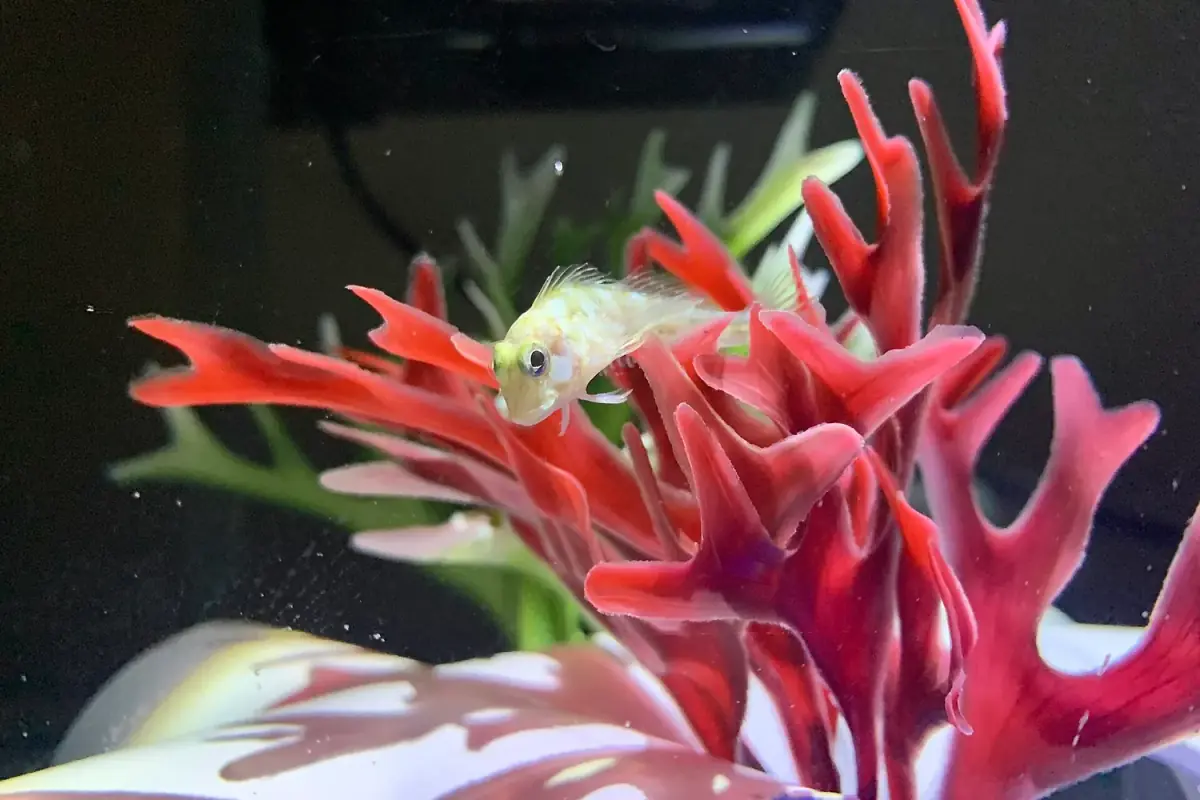
- A hiding place, such as a flowerpot or a plastic plant. A frightened fish with nowhere to hide gets more stressed.
- No substrate, or just a thin layer. Bare glass is easier to keep clean, and you can more easily see leftover food and waste.
Use separate nets and buckets for the quarantine tank, or rinse them well between uses, so you do not carry disease around on your equipment.
How to do it
- Fill the tank with water from the main aquarium. That way it has the right temperature and values, and the fish does not have to get used to new water twice.
- Add the new fish as described in How to add new fish.
- Feed lightly and remove leftovers. A small tank tolerates less than a big one.
- Change some of the water often, a couple of times a week, and test for ammonia and nitrite. A new filter in a small tank has few bacteria.
How long
Experts recommend at least four weeks, and longer for valuable fish. Many diseases show up in the first week or two, but some take longer, so four weeks without signs of disease is a good sign. Ich goes through its life cycle in 3–6 days in a typical tropical aquarium, and more slowly in cooler water.
If you add more new fish to the tank along the way, the quarantine starts over.
What to look for
Look at the fish every day:
- White spots on fins and body, like grains of salt
- Golden dust on the skin, which may be velvet
- Ragged fins, sores or white, cottony patches
- Clamped fins, rubbing against things, fast breathing or a fish that is not eating
If you see any of this, treat in the quarantine tank. There is more in Sick fish: how to spot it and what to do first. Remember to keep the quarantine going for a while after the fish is healthy again.
When the fish moves in
When the quarantine is over, move the fish across with a net, not with the water. The water in the quarantine tank may still carry something you do not want in your aquarium.
The tank can stand empty until next time. If the fish was healthy throughout the quarantine, the sponge filter can go back into the main aquarium, so it is cycled for next time. If it was sick, wash and disinfect the tank and equipment, and start a new filter.