How to set up an aquarium from Australia and New Guinea
The home of rainbowfish: water, substrate, plants and light for rainbowfish, blue-eyes and peacock gudgeons, with a long aquarium and open water in the middle.
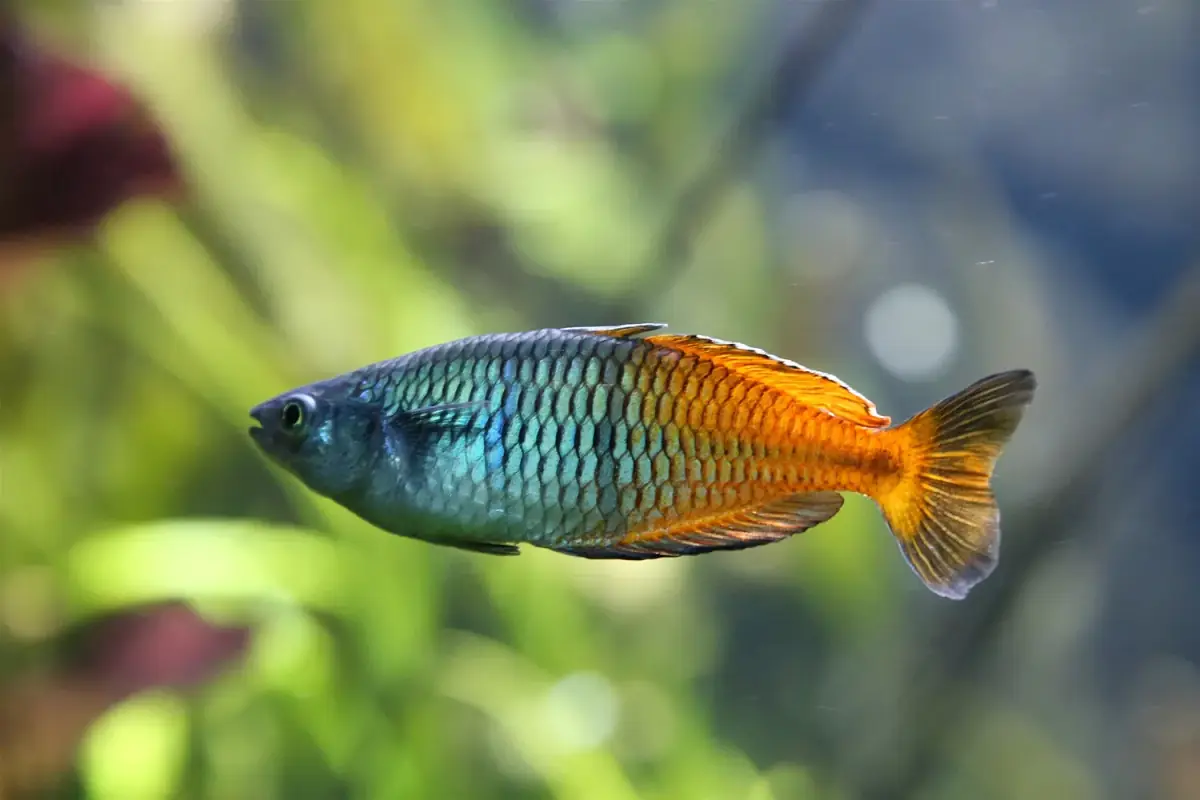
Australia and New Guinea are the home of the rainbowfish. They swim a lot, so the aquarium should be long, with plenty of room in the middle. Read more about what a biotope is in Biotope aquariums: a slice of nature.
Water
The rivers in this region are not all alike. Some are clear and hard, others are brown from plant matter and soft, especially in forest streams and swamps. So choose species that thrive in the water you have.
A shared starting point is 24–28 °C, pH 7–8 and moderately hard water. But the species vary:
- Boeseman's rainbowfish: 27–30 °C, pH 7–8 and 10–20 dGH. It is tropical and does poorly in soft, acidic water.
- Blue-eyes: 20–26 °C, pH 6.5–7.5 and 5–15 dGH.
- Peacock gudgeon: 22–26 °C, pH 6.5–7.5 and 5–10 dGH.
Tap water varies a lot by region, from very soft to very hard, so check your water supplier's figures or test it. If yours is soft, blue-eyes and peacock gudgeons do fine in it. Boeseman's rainbowfish needs harder water, so soft water must be made harder, gradually and with tests along the way; hard tap water may already be close. If your water is hard, mix it with RO water gradually for blue-eyes and peacock gudgeons, testing as you go. A heater with a thermostat is needed in every case, as none of these fish like a fluctuating temperature.
Bottom
The bottom of the rivers is sand, fine gravel and fallen leaves. The fish search it for food, and the peacock gudgeon likes a dark substrate. Use sand or fine, rounded gravel, and rinse it well before it goes into the aquarium. There is more on choosing one in Substrate and decor.
Feel free to add a few dried leaves to the bottom. They give cover and stain the water slightly brown, as they do in the rivers where the leaves fall in.
Decor
Roots and rocks along the back and sides, open water in front. Roots from the fish store are safe, but soak them for a few days before they go into the aquarium. Then they sink, and much of the color comes out.
Choose rocks with care. Limestone and marble make the water harder and can push the pH above 7.5, which does not suit blue-eyes and peacock gudgeons. Slate and granite change the water very little. A common mistake is to fill the middle with decor. Rainbowfish need swimming room.
Plants
Vallisneria, hornwort and other plants along the edges, and a few floating plants. Leave the middle free.
- Vallisneria has long, narrow leaves and copes with both the light and the substrate. It spreads by runners, so thin it out when it starts filling the middle.
- Hornwort floats freely in the water and does not need a substrate. It is easy and gives cover to small fish.
- Floating plants give shade and security near the surface, which the peacock gudgeon likes. Do not cover the whole surface, or the light will not reach the plants below.
Light
Medium to bright. Rainbowfish show their best colors in bright water and morning sun. Set a timer for 8–10 hours a day, and keep the aquarium away from sunny windows in the afternoon, or the algae will come. The peacock gudgeon lives under trees in nature, so it does better with some shade from floating plants than in full light.
Typical fish
- Boeseman's rainbowfish (Melanotaenia boesemani): a large, colorful rainbowfish. It needs an aquarium of at least 120 cm and at least 6–8 fish. The males show their best colors in a group.
- Blue-eyes (Pseudomugil): small fish up to 7 cm. The Pacific blue-eye, Pseudomugil signifer, needs at least 60 cm and 8–10 fish. Below 60 cm it gets cramped for a school.
- Peacock gudgeon (Tateurndina ocellicauda): a small fish from Papua New Guinea, up to 7.5 cm. An aquarium of 45 × 30 cm holds a pair. It likes small live or frozen foods such as mosquito larvae and krill, and does best in calm water with little flow.
Rainbowfish live in schools, so keep several of the same species, see How many fish can I keep?.
Things to watch out for
- Soft tap water does not suit them all. Boeseman's rainbowfish needs harder water, and you have to adjust for that. Blue-eyes and peacock gudgeons cope better.
- Limestone and coral can push the pH too high. Test the pH and hardness a few days after you add something, not just at the start. See How to test your water.
- Single fish get stressed. Rainbowfish and blue-eyes belong in schools. Keep several of each species.
- The peacock gudgeon is a good jumper. Seal the lid, corners included.
- Vallisneria can take over. Thin it regularly, or you get a dense mat of plants with no room for the fish.
- Water changes matter just as much. Change a fifth of the water every week.