Freshwater
Striped catfish
Pangasianodon hypophthalmus
Pangasiidae
Pangasianodon hypophthalmus
Pangasiidae
Know what is missing? Sign up and suggest it in the app.
Know what is missing? Sign up and suggest it in the app.
Worked out from its length, as we don’t yet know what size tank it should have. Do you? Sign up and tell us in the app.
Try other measures in the appLives wild in Cambodia, Laos, Thailand, and Vietnam.
Introduced to Bangladesh, Myanmar (Burma), Philippines, and Singapore.
Inhabits large rivers. Recorded as having been or being farmed in rice fields. Omnivorous, feeding on fish and crustaceans as well as on vegetable debris. A migratory species, moving upstream of the Mekong from unknown rearing areas to spawn in unknown areas in May-July and returning to the mainstream when the river waters fall seeking rearing habitats in September -December. South of the Khone Falls, upstream migration occurs from October to February, with peak in November-December. This migration is triggered by receding water and appears to be a dispersal migration following the lateral migration from flooded areas back into the Mekong at the end of the flood season. Downstream migration takes place from May to August from Stung Treng to Kandal in Cambodia and further into the Mekong Delta in Viet Nam. The presence of eggs during March to August from Stung Treng to Kandal indicates that the downstream migration is both a spawning and a trophic migration eventually bringing the fish into floodplain areas in Cambodia and Viet Nam during the flood season. Common in the lower Mekong, where the young are collected for rearing in floating fish cages. In the middle Mekong it is represented by large individuals that lose the dark coloration of the juveniles and subadults and become grey without stripe. One of the most important aquaculture species in Thailand. A photo of a 44 kg individual was said to have been featured in a Thai magazine (J.F. Helias, pers. comm., Fishing Adventures Thailand, e-mail: [email protected]). Such a maximum weight also seems reasonable based on length-weight relationship for this species. Aquarium keeping: in groups of 5 or more individuals; not recommended for home aquariums; minimum aquarium size >150 cm.
Source: FishBase
Temperament, fin nippers, fish that eat other fish, and fish that need the same water. And what the Harmony mark in the app means.
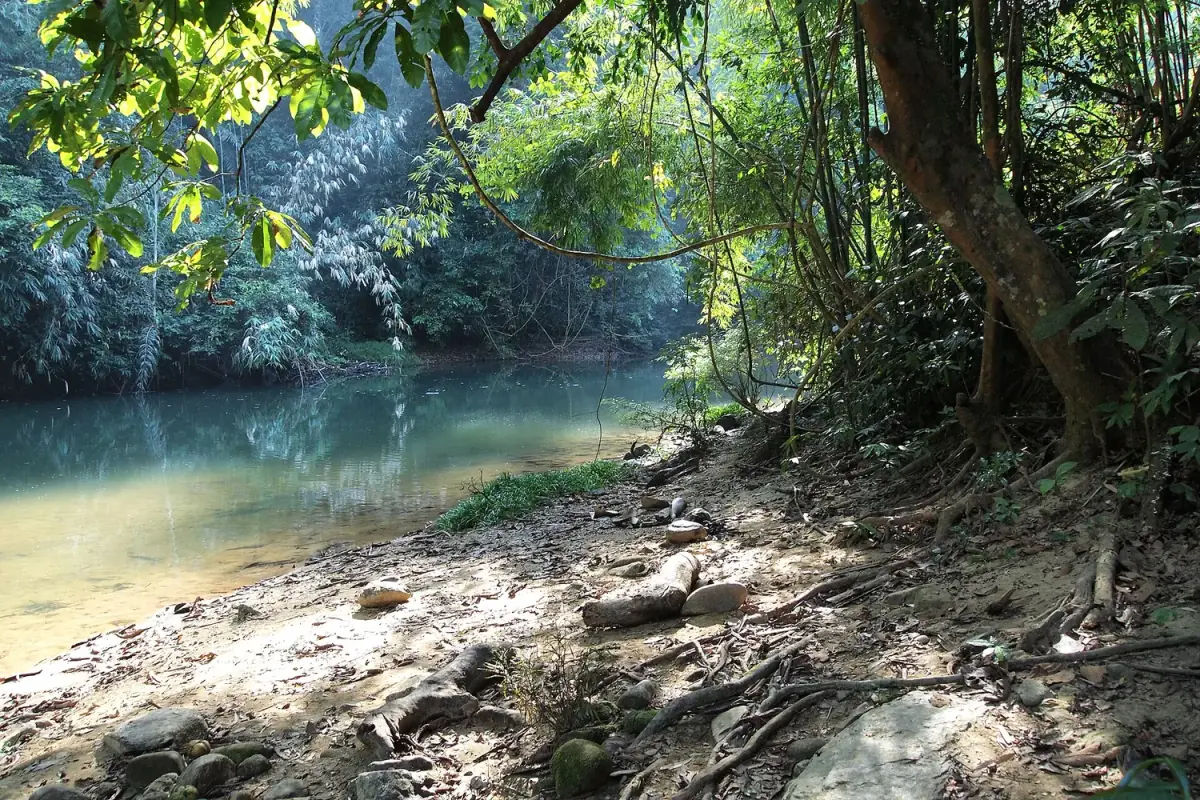
Two aquariums from Southeast Asia: calm forest streams and peat swamps with soft, brown water, and fast mountain streams with cool, oxygen-rich water.
From the store to the tank: how to get the fish used to your water, why you should add only a few at a time, and what to watch for in the first few days.
Why new fish should live in a tank of their own for a few weeks before they move in, what you need, and what to look for.