Freshwater
Kampoyo
Bagrus meridionalis
Bagridae
Bagrus meridionalis
Bagridae
Know what is missing? Sign up and suggest it in the app.
Know what is missing? Sign up and suggest it in the app.
Worked out from its length, as we don’t yet know what size tank it should have. Do you? Sign up and tell us in the app.
Try other measures in the appLives wild in Malawi, Mozambique, and Tanzania.
Introduced to Zimbabwe.
Occurs from the lower reaches of rivers to the deepest habitable parts of the lake. Inhabits a variety of habitats. Feeds on small demersal cichlids during the night. Juveniles mainly feed on trophic eggs released by the female, whilst the male helps the young in searching for invertebrates in and around the nest. Mutualistic relationship with cichlids concerning defense and feeding of young of both the cichlid and B. meridionalis. Symbiotic relationship of parasitized host-parasite eater exist with Pseudotropheus crabro, which eats away necrotic tissue and parasites, but also steals eggs. Oviparous. Can produce sound as Amia or Synodontis species. Considered as a delicacy when smoked, making it one of the most highly priced fishes of Malawi.
Source: FishBase
Temperament, fin nippers, fish that eat other fish, and fish that need the same water. And what the Harmony mark in the app means.
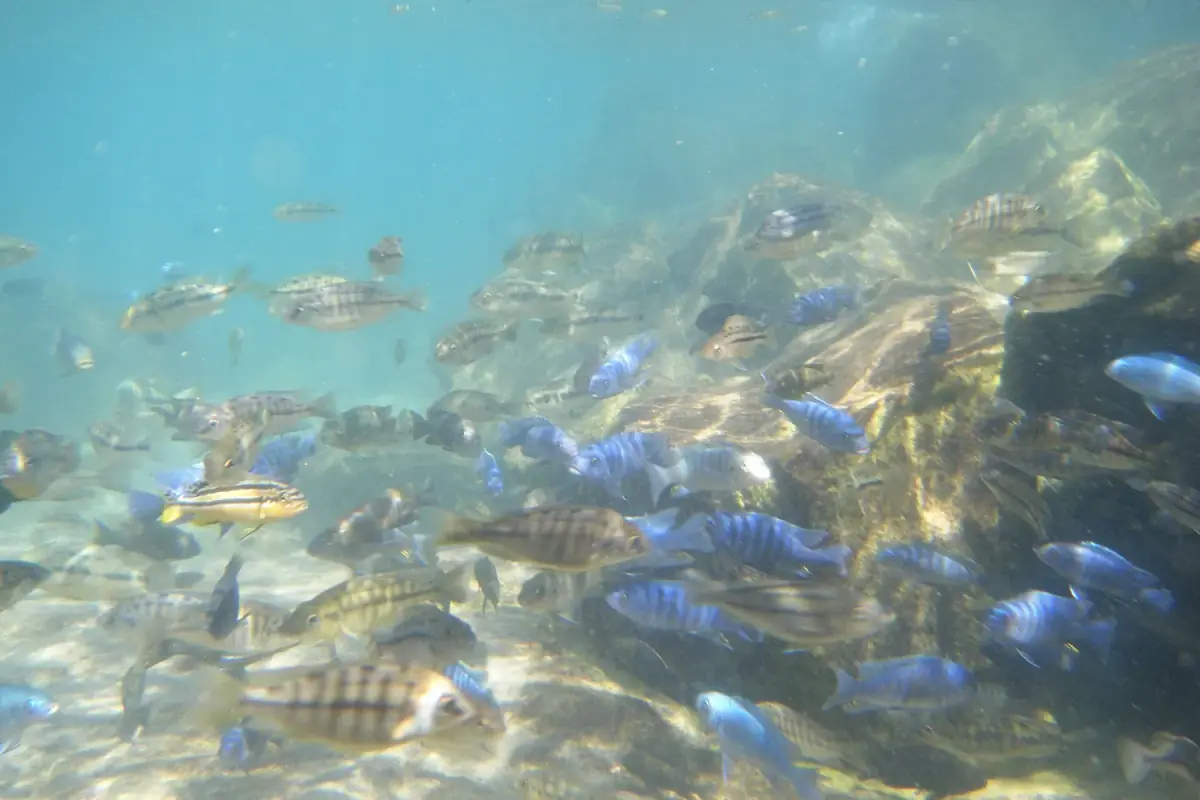
Two completely different aquariums: forest rivers with soft, brown water, roots and leaves, and Rift Valley lake cichlids in hard, alkaline water with big rock piles.
From the store to the tank: how to get the fish used to your water, why you should add only a few at a time, and what to watch for in the first few days.
Why new fish should live in a tank of their own for a few weeks before they move in, what you need, and what to look for.