Velvet and dropsy
Velvet is a fast-moving parasite. Dropsy is a sign that something is seriously wrong inside the fish. How to recognize them, and what you can do.
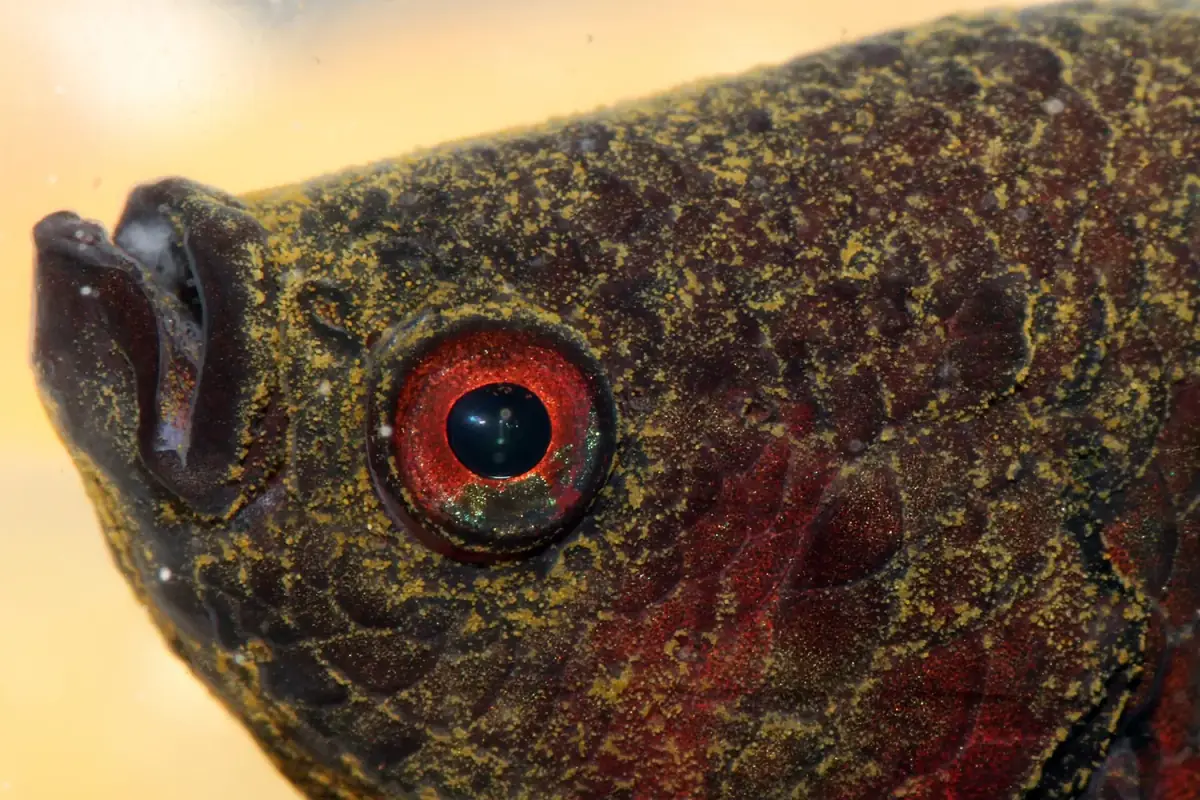
Velvet
Velvet, also called gold dust disease or Oodinium, is caused by a single-celled parasite that attaches to the skin and gills. It is related to algae and gets some of its energy from light.
What it looks like
- A fine dust on the body, golden, yellowish or rust-colored, as if the fish has been dusted with powder. It is much finer than the spots of Ich (white spot).
- The dust is hard to see in normal light. Shine a flashlight from the side in a dark room, and it glitters.
- The fish rubs itself, keeps its fins clamped, breathes fast and hangs at the surface or near the filter.
Because the parasite can settle on the gills first, the fish can be seriously ill before you see anything on the skin. Fast breathing and sluggishness in several fish at once is reason enough to take a closer look.
How to treat it
Velvet has a life cycle similar to ich: the parasite sits on the fish, drops off after several days, divides and swims out to find a new host. The medicine mainly gets it while it is swimming free, so treatment has to run for a longer time.
- Treat the whole aquarium with a velvet treatment from a fish store, and follow the instructions.
- Dim the lights, or keep them off for a few days. The parasite uses light to grow, and many aquarists keep the tank dark during treatment. The fish handle darkness fine for a while. Plants can manage a few days without light.
- Do a water change and check that the temperature is right before you start.
- Take out activated carbon and make sure there is good aeration.
- Keep going for a few days after the dust is gone, so all the parasites have time to hatch.
Many velvet treatments contain copper, which is toxic to shrimp and snails. See Shrimp and snails in the aquarium.
Dropsy
Dropsy is not one disease, but a sign that the fish is retaining fluid in its body. It usually happens when the kidneys or other organs fail, for example after an infection or a long time in poor water.
What it looks like
- A swollen belly, round and tight.
- Scales sticking out, so the fish looks like a pinecone when seen from above. This is the sign that sets dropsy apart from a fish that is simply fat or full of eggs.
- Often also bulging eyes, pale color and a fish that stays still and does not eat.
What you can do
By the time the scales stick out, it has usually gone far, and most fish do not recover. It is only honest to say so.
- Isolate the fish in a tank of its own with water from the aquarium. Dropsy itself is not contagious, but its cause can be.
- Test the water in the aquarium and do a water change. If one fish has dropsy, the rest may be having a hard time too.
- Some aquarists try magnesium sulfate (Epsom salt) in the tank to draw out fluid, but it is not well documented. In many places antibiotics need a prescription, so contact a vet if you want to treat with antibacterials.
- If the fish is suffering, the kindest thing is often to put it down. See When a fish has to be put down.
What they have in common
Velvet often comes with new fish, and dropsy follows a long period of strain. Both hit fish that are already weakened. The best thing you can do is the same as for almost every fish disease:
- Keep the water stable and good with regular water changes.
- Quarantine new fish. See Quarantine for new fish.
- Keep an eye on your fish every day, especially at feeding time, so you notice changes early.
The Norwegian Food Safety Authority (Mattilsynet) writes that it is easier to prevent disease with good care and good water quality than to medicate sick fish. For velvet and dropsy, that is truer than for most.