From freshwater to saltwater
What is different in a saltwater aquarium: salt, refractometer, live rock and corals. An introduction for anyone thinking of giving it a try.
The same, only more
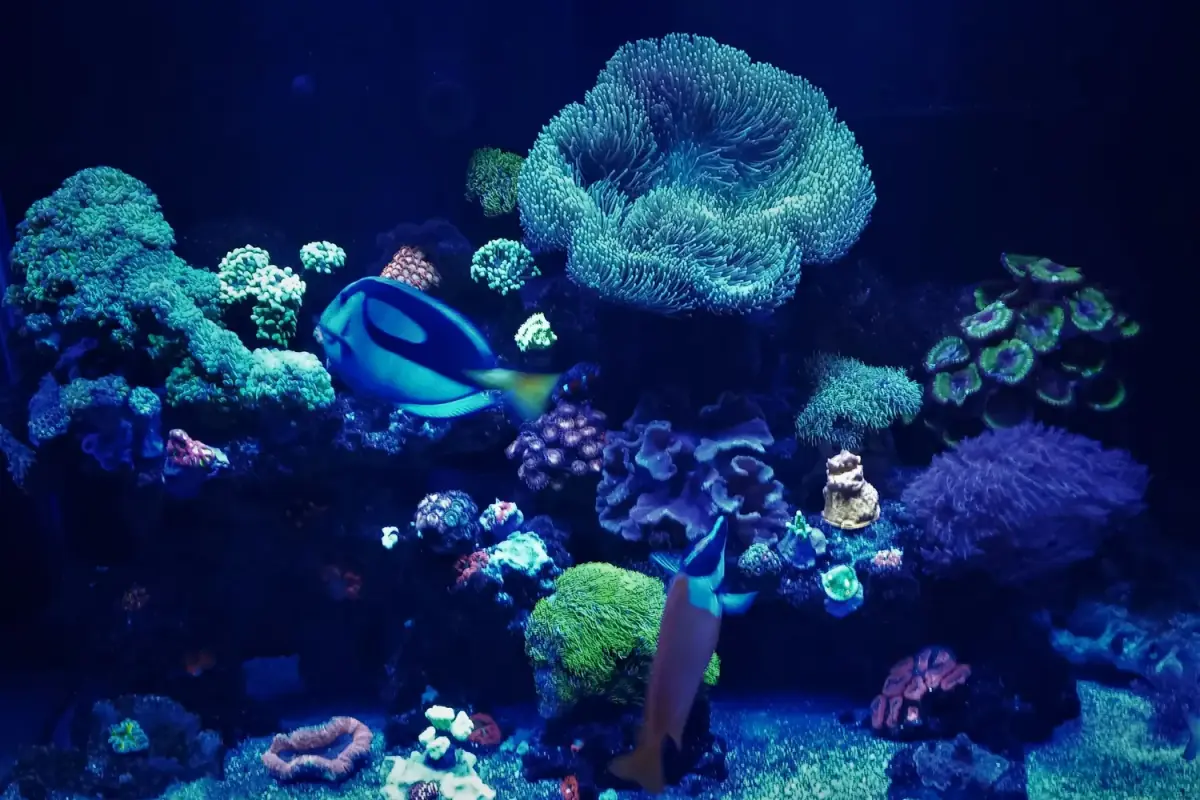
Many aquarists dream of a reef with corals and colorful fish. It is entirely possible, and the basic principles are the same as in freshwater: the tank must be cycled, the water must be stable, and the fish must get along and have enough room. See Cycling: the nitrogen cycle explained.
The difference is that the ocean is a very stable place, and many marine animals tolerate smaller swings than freshwater fish. That means more testing, more equipment and less room for mistakes. The Norwegian Food Safety Authority (Mattilsynet) writes that saltwater aquariums often call for a bigger investment in equipment. They also cost more to run.
The salt water
You mix the salt water yourself, from aquarium salt and pure water. Ordinary table salt does not work; aquarium salt is made to resemble seawater.
- Use pure water. Many use water purified by reverse osmosis (RO), since tap water can contain substances that feed algae. Test your tap water before you use it.
- Measure the salinity with a refractometer. A common target is 35 parts per thousand, or a specific gravity of around 1.025. The refractometer is more accurate than the cheap floating plastic hydrometers, which can lose accuracy over time.
- Top up with fresh water. Water evaporates, but the salt stays behind. If you top up with salt water, the tank gets saltier over time. Many use an automatic top-off.
Live rock
Live rock is porous rock from the sea or made for aquariums, full of bacteria and tiny animals. It works as an important filter: the bacteria in the rock deal with the waste, as the filter does in a freshwater tank. The rock is also where the fish hide and the corals sit.
Many start today with dry rock that becomes live over time. It takes longer, but you avoid bringing in unwanted animals and algae.
The equipment
Besides a heater and thermometer, as in freshwater, most saltwater aquariums have:
- strong circulation pumps, since corals and live rock need lots of water movement
- a protein skimmer, which removes waste from the water before it breaks down
- a refractometer and test kits for nitrate, phosphate, calcium, KH and magnesium, among others
- lighting made for corals, if you are keeping a reef
See The equipment you need for what the two have in common.
Fish, reef or both
- Fish only with live rock is the simplest. You avoid the strictest demands on light and water.
- A reef with easy corals, such as soft corals and many LPS corals, is a good next step.
- A reef with demanding stony corals (SPS) needs very stable water and a lot of experience.
Choose fish that tolerate each other and the corals. Some popular fish nip at corals or eat shrimp and snails.
Is it for you?
A saltwater aquarium is rewarding, but it is wise to have run a freshwater tank for a while first. Then you know cycling, water changes and testing, and you know whether you like the routines.
Choose a tank that is not too small. Just as in freshwater, a bigger tank is more stable, and in saltwater that matters even more. See Before you buy an aquarium.
The app has its own values for saltwater, and species profiles for marine fish, corals and invertebrates, so you can log the water and plan the tank the same way as in freshwater.