Saltwater
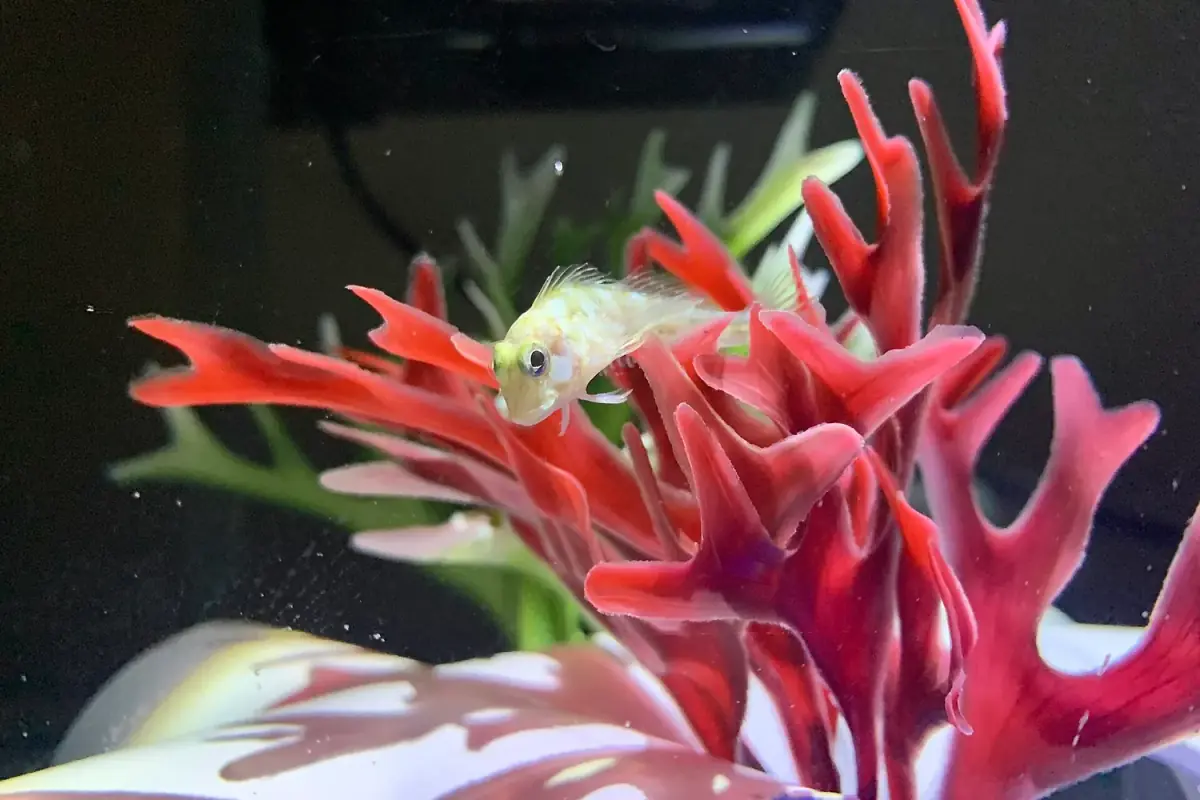
False cleanerfish
Aspidontus taeniatus
Blenniidae, Blenniinae
Aspidontus taeniatus
Blenniidae, Blenniinae
Know what is missing? Sign up and suggest it in the app.
Know what is missing? Sign up and suggest it in the app.
Worked out from its length, as we don’t yet know what size tank it should have. Do you? Sign up and tell us in the app.
Try other measures in the appLives wild in American Samoa, Australia, China, Christmas Island, Cocos (Keeling) Islands, Cook Islands, Egypt, Fiji, and 31 more countries.
Adults are found solitary or in small groups in lagoons, subtidal reef flats and outer reef slopes (where it occurs to depths of over 20 m). Often in pairs in empty worm tubes or narrow holes. They mimic the cleaner wrasse Labroides dimidiatus and nip fins, skin and scales of other fishes. They even copy the motion of the cleaner wrasse that may induce other fish to come close, then target their scales or mucus for a feed, biting and quickly retreating to the corals before the victim realizes that it was tricked; experienced fish recognize imposters and often give it a chase. Diet is supplemented with benthic invertebrates and zooplankton. Also feed on tubeworms and demersal fish eggs. Oviparous. Eggs are demersal and adhesive, and are attached to the substrate via a filamentous, adhesive pad or pedestal. Larvae are planktonic, often found in shallow, coastal waters.
Source: FishBase
From the store to the tank: how to get the fish used to your water, why you should add only a few at a time, and what to watch for in the first few days.
Why new fish should live in a tank of their own for a few weeks before they move in, what you need, and what to look for.
What is different in a saltwater aquarium: salt, refractometer, live rock and corals. An introduction for anyone thinking of giving it a try.