Cleaning the filter
How to keep the filter clean without killing the bacteria that do the work: tank water, never tap water, and never everything at once.
The filter is more than a strainer
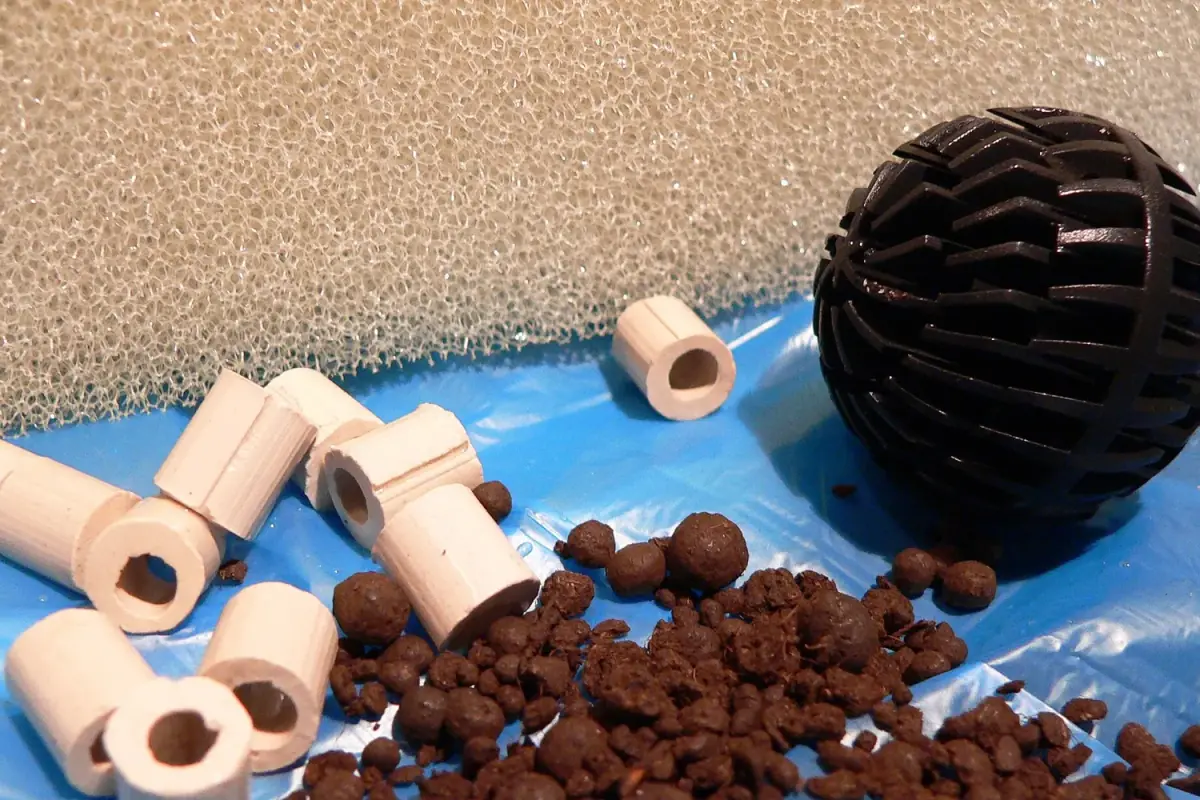
It's easy to think of the filter as something that catches dirt. It does that too, but the most important job is done by the bacteria living in the filter media. They turn toxic ammonia and nitrite into nitrate, as explained in Cycling: the nitrogen cycle explained.
The Norwegian Food Safety Authority (Mattilsynet) writes that if you clean the filter media too thoroughly, you remove the bacteria that break down waste. A filter scrubbed spotless can lead to ammonia and nitrite in the water a few days later, just like in a new tank.
When the filter needs cleaning
The filter shouldn't be cleaned on a fixed date, but when it needs it:
- The flow is weaker than usual.
- The sponges are clogged and brown with sludge.
- It's been a long time, typically a few weeks for an internal filter, and several months for a large canister filter.
A filter that's a bit brown and slimy inside isn't dirty in a bad way. That's the bacteria. The goal is to get the water flowing freely again, not to make it clean.
How to do it
- Do it during the water change. Take out a bucket of tank water before you vacuum the gravel, and use it for the filter.
- Turn off the filter and take out the media.
- Squeeze and rinse the sponges in the bucket of tank water a few times, until most of the sludge is out. They shouldn't look new.
- Rinse ceramic rings and other biological media gently in the same water, or leave them alone if the flow is good.
- Wipe the housing and the impeller with a brush or a cloth, under the tap is fine, since few bacteria live there.
- Put everything back and turn the filter on again.
Never in tap water
Tap water may contain chlorine, which kills the bacteria. It's also a different temperature, which they don't like. Always use tank water for sponges and biological media.
Never use soap or detergent either, on the filter or anything else that goes in the tank.
Not everything at once
If the filter has several sponges or chambers, clean only some of them each time. That leaves enough bacteria to keep the water safe while the rest recover.
The same goes if you're doing something else major in the tank. Don't clean the filter the same week you replace the substrate, add a lot of new fish or treat with medication.
Replacing filter media
Many manufacturers recommend replacing sponges and cartridges regularly. For biological media it's rarely necessary: a sponge can last for years as long as it isn't falling apart.
- Replace only what is worn out, and only part at a time, a few weeks apart.
- Fine filter pads and floss that catch fine particles can be replaced more often. Few bacteria live there.
- Activated carbon stops working after a few weeks. Most tanks don't need it, but it's useful after a treatment to remove leftover medication.
When the power is out
If the filter stops for more than a few hours, for example after a power outage, the bacteria inside get little oxygen, and some of them may die. Rinse the filter in tank water before you turn it back on, and test ammonia and nitrite over the next few days.